Basel problem
Basel problem is a mathematical problem.
All 4 facts, and where they come from
Facts
4 facts · 0 confirmed by two sources · 0 cited · 4 from one source
Where this comes from
Papalocal keeps its own record. It started from these sources; what each one said is kept here as it was copied, so a change on their side never changes this page by itself. Tap one to read its version.
What Wikidata says · copied November 17, 2026 · revision 2479013393
- Described as
- mathematical problem
- What it is
- mathematical problem; mathematical concept
- Field
- mathematical analysis
- Named after
- Basel
- Wikipedias with a page
- 35
Wikidata item Q810431 (wikidata.org/wiki/Q810431), public domain (CC0). Copied 2026-11-17.
What Wikipedia says · copied November 17, 2026 · revision 1380990005
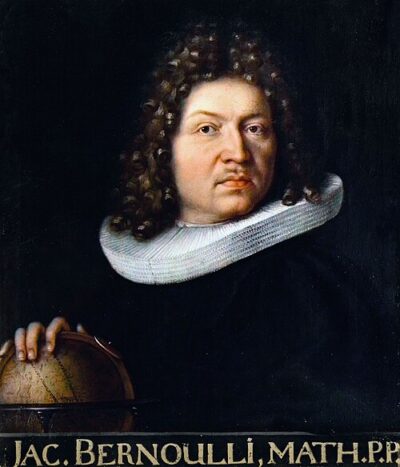
The Basel problem is a problem in mathematical analysis with relevance to number theory, concerning an infinite sum of inverse squares. It was first posed by Pietro Mengoli in 1650 and solved by Leonhard Euler in 1734, and read on 5 December 1735 in The Saint Petersburg Academy of Sciences. Since the problem had withstood the attacks of the leading mathematicians of the day, Euler's solution brought him immediate fame when he was twenty-eight. Euler generalised the problem considerably, and his ideas were taken up more than a century later by Bernhard Riemann in his seminal 1859 paper "On the Number of Primes Less Than a Given Magnitude", in which he defined the Riemann zeta function and proved its basic properties. The problem is named after the city of Basel, hometown of Euler as well as of the Bernoulli family who unsuccessfully attacked the problem.
The Basel problem asks for the precise summation of the reciprocals of the squares of the natural numbers, i.e. the precise sum of the infinite series:
∑n=1∞1n2=112+122+132+⋯.
The sum of the series is approximately equal to 1.644934. The Basel problem asks for the exact sum of this series (in closed form), as well as a proof that this sum is correct. Euler found the exact sum to be π2/6 and announced this discovery in 1735. His arguments were based on manipulations that were not justified at the time, although he was later proven correct. He produced an accepted proof in 1741.
The solution to this problem can be used to estimate the probability that two large random numbers are coprime. Two random integers in the range from 1 to n, in the limit as n goes to infinity, are relatively prime with a probability that approaches 6/π2, the reciprocal of the solution to the Basel problem.
From the Wikipedia article “Basel problem” (en.wikipedia.org/wiki/Basel_problem), by its contributors, under CC BY-SA 4.0 (creativecommons.org/licenses/by-sa/4.0/). Copied 2026-11-17; not changed.
Confirmed Two sources agree. Cited One source, and it names where it got it. One source One source, without a reference of its own. Sources disagree The sources disagree. We show the best-supported value and keep theirs below.