BASIC
BASIC is a programming language for beginners, mainly using familiar English words or abbreviations of them. It came out in 1964. It was made by Thomas E. Kurtz, John George Kemeny and Mary Kenneth Keller.
- Came out
- 1964
- Made by
- Thomas E. Kurtz
All 6 facts, and where they come from
Facts
6 facts · 0 confirmed by two sources · 1 cited · 5 from one source
Where this comes from
Papalocal keeps its own record. It started from these sources; what each one said is kept here as it was copied, so a change on their side never changes this page by itself. Tap one to read its version.
What Wikidata says · copied November 17, 2026 · revision 2567936633
- Described as
- programming language for beginners, mainly using familiar English words or abbreviations of them
- Other names
- Symbolic Instruction Code, BASIC programming language, Beginners’ All-purpose Symbolic Instruction Code, Basic, Beginner's All-purpose Symbolic Instruction Code
- What it is
- non-structured programming language; imperative programming language
- Made by
- Thomas E. Kurtz; John George Kemeny · 1 reference; Mary Kenneth Keller · 2 references
- Came out
- 1964
- Wikipedias with a page
- 95
Wikidata item Q42979 (wikidata.org/wiki/Q42979), public domain (CC0). Copied 2026-11-17.
What Wikipedia says · copied November 17, 2026 · revision 1385395543
BASIC (Beginner's All-purpose Symbolic Instruction Code) is a family of general-purpose, high-level programming languages designed for ease of use. The original version was created by John G. Kemeny and Thomas E. Kurtz at Dartmouth College in 1964. They wanted to enable students in non-scientific fields to use computers. At the time, nearly all computers required writing custom software, which only scientists and mathematicians tended to learn.
In addition to the programming language, Kemeny and Kurtz developed the Dartmouth Time-Sharing System (DTSS), which allowed multiple users to edit and run BASIC programs simultaneously on remote terminals. This general model became popular on minicomputer systems like the PDP-11 and Data General Nova in the late 1960s and early 1970s. Hewlett-Packard produced an entire computer line for this method of operation, introducing the HP2000 series in the late 1960s and continuing sales into the 1980s. Many early video games trace their history to one of these versions of BASIC.
The emergence of microcomputers in the mid-1970s led to the development of multiple BASIC dialects, including Microsoft BASIC in 1975. Due to the tiny main memory available on these machines, often 4 KB, a variety of Tiny BASIC dialects were also created. BASIC was available for almost any system (for instance all of the original Apple computers included the BASIC interpreter) of the era and became the de facto programming language for home computer systems that emerged in the late 1970s. These PCs almost always had a BASIC interpreter installed by default, often in the machine's firmware or sometimes on a ROM cartridge.
BASIC declined in popularity in the 1990s, as more powerful microcomputers came to market and programming languages with advanced features (such as Pascal and C) became tenable on such computers. By then, most nontechnical personal computer users relied on pre-written applications rather than writing their own programs. In 1991, Microsoft released Visual Basic, combining an updated version of BASIC with a visual forms builder. This reignited use of the language and "VB" remains a major programming language in the form of VB.NET, while a hobbyist scene for BASIC more broadly continues to exist.
From the Wikipedia article “BASIC” (en.wikipedia.org/wiki/BASIC), by its contributors, under CC BY-SA 4.0 (creativecommons.org/licenses/by-sa/4.0/). Copied 2026-11-17; not changed.
Confirmed Two sources agree. Cited One source, and it names where it got it. One source One source, without a reference of its own. Sources disagree The sources disagree. We show the best-supported value and keep theirs below.
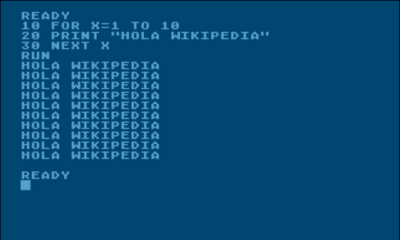
Picture: Calin99, via Wikimedia Commons · Public domain
People connected 3
Known for it
- JJohn George KemenyJewish-Hungarian American mathematician, computer scientist, educator, and President of Dartmouth College
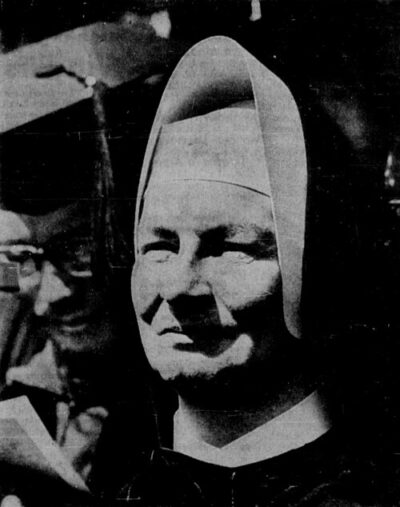 Mary Kenneth Kellerfirst American woman to receive a PhD in computer science (1913-1985); simultaneously with Irving Tang first American to receive PhD in computer science, nun