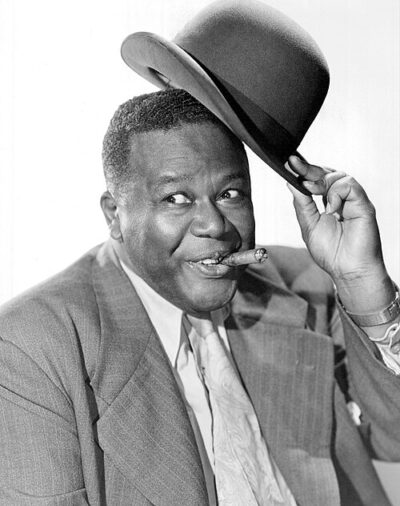
Basin Street Blues
Basin Street Blues is an original song written and composed by Spencer Williams. It came out in 1926. It is performed by Louis Armstrong & His Orchestra, Ella Fitzgerald and Sam Cooke.
- Released
- 1926
- Performed by
- Louis Armstrong & His Orchestra
All 8 facts, and where they come from
Facts
8 facts · 0 confirmed by two sources · 1 cited · 7 from one source
Where this comes from
Papalocal keeps its own record. It started from these sources; what each one said is kept here as it was copied, so a change on their side never changes this page by itself. Tap one to read its version.
What Wikidata says · copied November 19, 2026 · revision 2569601994
- Described as
- original song written and composed by Spencer Williams
- What it is
- musical work/composition
- Performed by
- Louis Armstrong & His Orchestra; Ella Fitzgerald · 1 reference; Sam Cooke
- Music by
- Spencer Williams · 1 reference
- Released
- 1926
- Language
- English
- Named after
- Basin Street
- Wikipedias with a page
- 7
Wikidata item Q810176 (wikidata.org/wiki/Q810176), public domain (CC0). Copied 2026-11-19.
What Wikipedia says · copied November 19, 2026 · revision 1382194568
"Basin Street Blues" is a song often performed by Dixieland jazz bands, written by Spencer Williams in 1928 and recorded that year by Louis Armstrong. The verse with the lyric "Won't you come along with me / To the Mississippi..." was later added by Glenn Miller and Jack Teagarden.
The Basin Street of the title refers to the main street of Storyville, the red-light district of early 20th-century New Orleans, north of the French Quarter. It became a red light district in 1897.
From the Wikipedia article “Basin Street Blues” (en.wikipedia.org/wiki/Basin_Street_Blues), by its contributors, under CC BY-SA 4.0 (creativecommons.org/licenses/by-sa/4.0/). Copied 2026-11-19; not changed.
Confirmed Two sources agree. Cited One source, and it names where it got it. One source One source, without a reference of its own. Sources disagree The sources disagree. We show the best-supported value and keep theirs below.