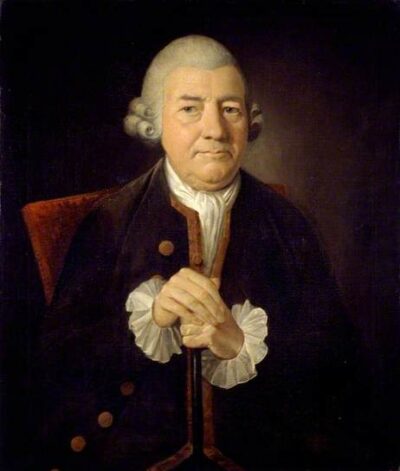
Baskerville
Baskerville is a transitional serif typeface designed in the 1750s. It came out in 1757.
- Came out
- 1757
All 3 facts, and where they come from
Facts
3 facts · 0 confirmed by two sources · 0 cited · 3 from one source
Where this comes from
Papalocal keeps its own record. It started from these sources; what each one said is kept here as it was copied, so a change on their side never changes this page by itself. Tap one to read its version.
What Wikidata says · copied November 17, 2026 · revision 2531654762
- Described as
- transitional serif typeface designed in the 1750s
- What it is
- typeface family
- Came out
- 1757
- Named after
- John Baskerville
- Wikipedias with a page
- 16
Wikidata item Q768857 (wikidata.org/wiki/Q768857), public domain (CC0). Copied 2026-11-17.
What Wikipedia says · copied November 17, 2026 · revision 1381722206
Baskerville is a serif typeface designed in 1757 by John Baskerville in Birmingham, England, and cut into metal by punchcutter John Handy. Baskerville is classified as a transitional typeface, intended as a refinement of what are now called old-style typefaces of the period, especially those of Baskerville's most eminent contemporary, William Caslon.
Compared to earlier designs popular in Britain, Baskerville increased the contrast between thick and thin strokes, making the serifs sharper and more tapered, and shifted the axis of rounded letters to a more vertical position. The curved strokes are more circular in shape, and the characters became more regular. These changes created a greater consistency in size and form, influenced by the calligraphy Baskerville had learned and taught as a young man. Baskerville's typefaces remain very popular in book design and there are many modern revivals, which often add features such as bold type which did not exist in Baskerville's time.
As Baskerville's typefaces were proprietary to him and sold to a French publisher after his death, some designs influenced by him were made by British punchcutters. The Fry Foundry of Bristol created a version, probably cut by their typefounder Isaac Moore. Marketed in the twentieth century as "Fry's Baskerville" or "Baskerville Old Face", a digitisation based on the more delicate larger sizes is included with some Microsoft software.
From the Wikipedia article “Baskerville” (en.wikipedia.org/wiki/Baskerville), by its contributors, under CC BY-SA 4.0 (creativecommons.org/licenses/by-sa/4.0/). Copied 2026-11-17; not changed.
Confirmed Two sources agree. Cited One source, and it names where it got it. One source One source, without a reference of its own. Sources disagree The sources disagree. We show the best-supported value and keep theirs below.
Picture: Wikimedia Commons: WmBaskerville.png · See Commons file page