Basmachi movement
The Basmachi movement is a decentralized decolonial movement which undertook a uprising against Russian Imperial and Soviet rule by the Muslim peoples of Central Asia (1916–1934).
All 2 facts, and where they come from
Facts
2 facts · 0 confirmed by two sources · 0 cited · 2 from one source
Where this comes from
Papalocal keeps its own record. It started from these sources; what each one said is kept here as it was copied, so a change on their side never changes this page by itself. Tap one to read its version.
What Wikidata says · copied November 17, 2026 · revision 2536588928
- Described as
- decentralized decolonial movement which undertook a uprising against Russian Imperial and Soviet rule by the Muslim peoples of Central Asia (1916–1934)
- Other names
- Basmachestvo, Basmaçılıq, Basmashılar qozğalısı
- What it is
- resistance movement; rebellion
- Wikipedias with a page
- 46
Wikidata item Q255352 (wikidata.org/wiki/Q255352), public domain (CC0). Copied 2026-11-17.
What Wikipedia says · copied November 17, 2026 · revision 1384863201
The Basmachi movement (Russian: Басмачество, romanized: Basmachestvo, derived from Uzbek: Босмачи, romanized: Bosmachi, lit. 'bandits') was an uprising against Imperial Russian and Soviet rule in Central Asia. It has been called "probably the most important movement of opposition to Soviet rule in Central Asia".
The movement's roots lay in the anti-conscription violence of 1916 which erupted when the Russian Empire began to draft Muslims for army service in World War I. In the months following the October 1917 Revolution, the Bolsheviks seized power in many parts of the Russian Empire and the Russian Civil War began. Turkestani Muslim political movements attempted to form an autonomous government in the city of Kokand, in the Fergana Valley. The Bolsheviks launched an assault on Kokand in February 1918 and carried out a general massacre of up to 25,000 people. The massacre rallied support to the Basmachi who waged a guerrilla and conventional war that seized control of large parts of the Fergana Valley and much of Turkestan. The movement's goal was to defend the customary local way of life, which was perceived as being threatened by the Russians.
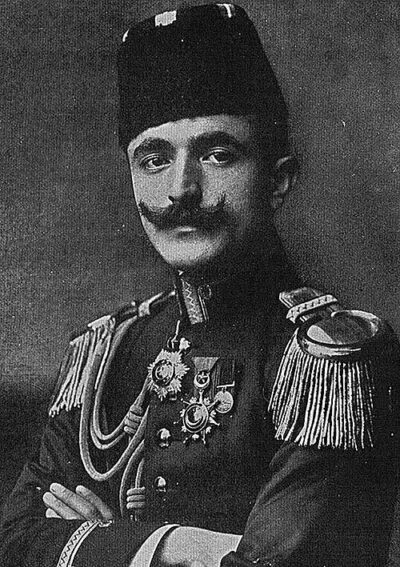
The group's main leader was Ibrahim Bek. Enver Pasha, former Ottoman war minister and one of the key architects of the Armenian genocide, joined the movement after November 1921, seeking to create a pan-Turkist and pan-Islamist Empire. However, the rebels were not interested in either pan-Turkism or pan-Islamism and Basmachi leaders were openly hostile towards him. He died in August 1922, but his short involvement left lasting damage to the movement due to his military failures and diversion from the Basmachi's original goals. He is considered one of the reasons for the movement's ultimate failure.
By 1923 the Red Army's extensive campaigns had dealt the Basmachis many defeats. After major Red Army campaigns and concessions regarding economic and Islamic practices in the mid-1920s, the military fortunes and popular support of the Basmachi declined. Resistance to Soviet leadership did flare up again, to a lesser extent, in response to collectivization campaigns in the pre-World War II era.
From the Wikipedia article “Basmachi movement” (en.wikipedia.org/wiki/Basmachi_movement), by its contributors, under CC BY-SA 4.0 (creativecommons.org/licenses/by-sa/4.0/). Copied 2026-11-17; not changed.
Confirmed Two sources agree. Cited One source, and it names where it got it. One source One source, without a reference of its own. Sources disagree The sources disagree. We show the best-supported value and keep theirs below.
Picture: Wikimedia Commons: Flag of Turkestan.svg · See Commons file page