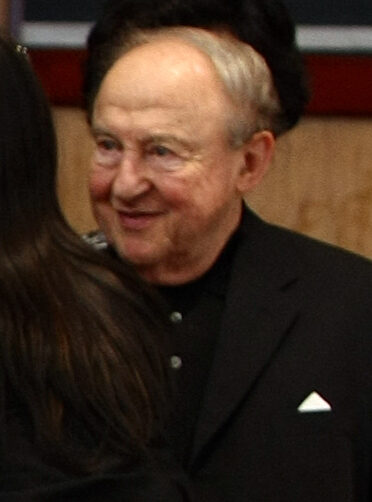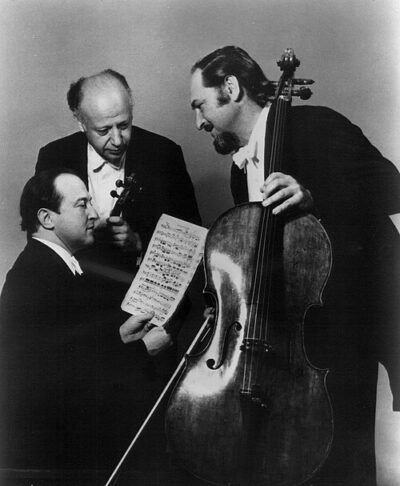
Beaux Arts Trio
Beaux Arts Trio is an US-american piano trio. It was founded in 1955 by Menahem Pressler.
- Founded
- 1955
- Founded by
- Menahem Pressler
- Country
- United States
All 8 facts, and where they come from
Facts
8 facts · 0 confirmed by two sources · 1 cited · 7 from one source
Where this comes from
Papalocal keeps its own record. It started from these sources; what each one said is kept here as it was copied, so a change on their side never changes this page by itself. Tap one to read its version.
What Wikidata says · copied November 17, 2026 · revision 2563860952
- Described as
- US-american piano trio
- What it is
- piano trio
- Genre
- classical music
- Country of origin
- United States
- Founded
- 1955 · 1 reference
- Ended
- 2008
- Founded by
- Menahem Pressler
- Country
- United States
- Official website
- http://www.beauxartstrio.org/
- Wikipedias with a page
- 15
Wikidata item Q813472 (wikidata.org/wiki/Q813472), public domain (CC0). Copied 2026-11-17.
What Wikipedia says · copied November 17, 2026 · revision 1381961629
The Beaux Arts Trio was a noted piano trio, celebrated for their emotional depth and wide-ranging repertoire. They made their debut on 13 July 1955, at the Berkshire Music Festival, Lenox, Massachusetts, United States, known today as the Tanglewood Music Center. Their final American concert was held at Tanglewood on 21 August 2008. It was webcast live and archived on NPR Music. Their final concert was in Lucerne, Switzerland, on 6 September 2008.
The Beaux Arts Trio recorded the entire standard piano trio repertoire. In 2005, the trio celebrated its 50th anniversary with two special CD issues, one featuring their most popular releases through their long years of recording (released by Philips Records), and the other an anniversary collection of new music (released by Warner Records).
From the Wikipedia article “Beaux Arts Trio” (en.wikipedia.org/wiki/Beaux_Arts_Trio), by its contributors, under CC BY-SA 4.0 (creativecommons.org/licenses/by-sa/4.0/). Copied 2026-11-17; not changed.
Confirmed Two sources agree. Cited One source, and it names where it got it. One source One source, without a reference of its own. Sources disagree The sources disagree. We show the best-supported value and keep theirs below.
Picture: Unknown author, via Wikimedia Commons · Public domain