Beilstein database
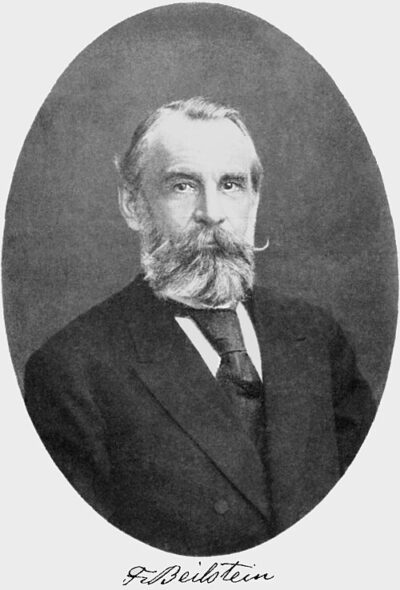
Beilstein database is a database in the field of organic chemistry. It came out in 1881. It was written by Friedrich Konrad Beilstein.
- Came out
- 1881
- Written by
- Friedrich Konrad Beilstein
All 8 facts, and where they come from
Facts
8 facts · 0 confirmed by two sources · 0 cited · 8 from one source
Where this comes from
Papalocal keeps its own record. It started from these sources; what each one said is kept here as it was copied, so a change on their side never changes this page by itself. Tap one to read its version.
What Wikidata says · copied November 18, 2026 · revision 2548744091
- Described as
- database in the field of organic chemistry
- What it is
- chemical database; bibliographic database; standard work
- Written by
- Friedrich Konrad Beilstein
- Language
- German · 1 reference
- Came out
- 1881
- Field
- organic chemistry
- Named after
- Friedrich Konrad Beilstein
- Wikipedias with a page
- 26
Wikidata item Q116024 (wikidata.org/wiki/Q116024), public domain (CC0). Copied 2026-11-18.
What Wikipedia says · copied November 18, 2026 · revision 1333825073
The Beilstein database is a database in the field of organic chemistry, in which compounds are uniquely identified by their Beilstein Registry Number. The database covers the scientific literature from 1771 to the present and contains experimentally validated information on millions of chemical reactions and substances from original scientific publications. The electronic database was created from Handbuch der Organischen Chemie (Beilstein's Handbook of Organic Chemistry), founded by Friedrich Konrad Beilstein in 1881, but has appeared online under a number of different names, including Crossfire Beilstein. Since 2009, the content has been maintained and distributed by Elsevier Information Systems in Frankfurt under the product name "Reaxys".
The database contains information on reactions, substances, structures and properties. Up to 350 fields containing chemical and physical data (such as melting point, refractive index etc.) are available for each substance. References to the literature in which the reaction or substance data appear are also given.
The Beilstein content made available through Reaxys is complemented by information drawn from Gmelin (which gives access to the Gmelin Database), a very large repository of organometallic and inorganic information, as well as by information drawn from the Patent Chemistry Database. The Reaxys registered trademark and the database itself are owned and protected by Elsevier Properties SA and used under license.
From the Wikipedia article “Beilstein database” (en.wikipedia.org/wiki/Beilstein_database), by its contributors, under CC BY-SA 4.0 (creativecommons.org/licenses/by-sa/4.0/). Copied 2026-11-18; not changed.
Confirmed Two sources agree. Cited One source, and it names where it got it. One source One source, without a reference of its own. Sources disagree The sources disagree. We show the best-supported value and keep theirs below.