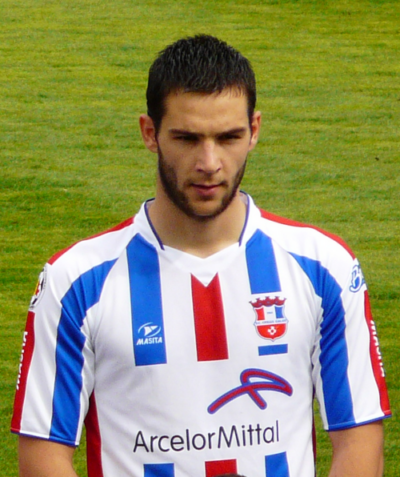
Békéscsaba 1912 Előre
Békéscsaba 1912 Előre is a Hungarian sports club. It plays association football in the Nemzeti Bajnokság III. Its home is Stadion Kórház utcai.
- Sport
- association football
- League
- Nemzeti Bajnokság III
- Home venue
- Stadion Kórház utcai
- Founded
- 1912
All 8 facts, and where they come from
Facts
8 facts · 0 confirmed by two sources · 0 cited · 8 from one source
Where this comes from
Papalocal keeps its own record. It started from these sources; what each one said is kept here as it was copied, so a change on their side never changes this page by itself. Tap one to read its version.
What Wikidata says · copied November 18, 2026 · revision 2560504844
- Described as
- Hungarian sports club
- What it is
- association football club
- Founded
- 1912
- Headquarters
- Békéscsaba
- Country
- Hungary
- Sport
- association football
- League
- Nemzeti Bajnokság III
- Home venue
- Stadion Kórház utcai
- Official website
- https://1912elore.hu/
- Wikipedias with a page
- 22
Wikidata item Q570228 (wikidata.org/wiki/Q570228), public domain (CC0). Copied 2026-11-18.
What Wikipedia says · copied November 18, 2026 · revision 1385017806
Békéscsaba 1912 Előre is a Hungarian football club from Békéscsaba, Békés. The club was founded in 1912 as Előre Munkás Testedző Egyesület. Előre translates as Forward in English. The colours of the club are lilac and white. The club currently play in Nemzeti Bajnokság II, the second tier of Hungarian football. The club achieved its greatest success in 1988 when it won the Hungarian Cup competition, defeating Budapest Honvéd FC 3–2 in the final.
Until the end of 2004–05 the club spent a total of 25 seasons in the first Hungarian division, the Nemzeti Bajnokság I. They were promoted back to the top tier in 2015.
From the Wikipedia article “Békéscsaba 1912 Előre” (en.wikipedia.org/wiki/Békéscsaba_1912_Előre), by its contributors, under CC BY-SA 4.0 (creativecommons.org/licenses/by-sa/4.0/). Copied 2026-11-18; not changed.
Confirmed Two sources agree. Cited One source, and it names where it got it. One source One source, without a reference of its own. Sources disagree The sources disagree. We show the best-supported value and keep theirs below.