Bell number
Bell number is an integer sequence counting the possible partitions of a set.
All 2 facts, and where they come from
Facts
2 facts · 0 confirmed by two sources · 0 cited · 2 from one source
Where this comes from
Papalocal keeps its own record. It started from these sources; what each one said is kept here as it was copied, so a change on their side never changes this page by itself. Tap one to read its version.
What Wikidata says · copied November 17, 2026 · revision 2488297644
- Described as
- integer sequence counting the possible partitions of a set
- What it is
- mathematical concept
- Named after
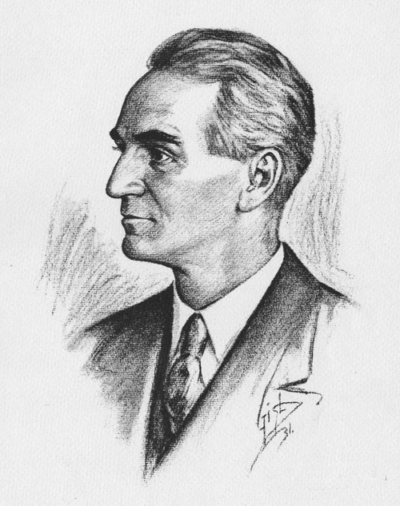
- Eric Temple Bell
- Wikipedias with a page
- 29
Wikidata item Q816063 (wikidata.org/wiki/Q816063), public domain (CC0). Copied 2026-11-17.
What Wikipedia says · copied November 17, 2026 · revision 1383140946
In combinatorial mathematics, the Bell numbers count the possible partitions of a set. These numbers have been studied by mathematicians since the 19th century, and their roots go back to medieval Japan. In an example of Stigler's law of eponymy, they are named after Eric Temple Bell, who wrote about them in the 1930s.
The Bell numbers are denoted Bn, where n is an integer greater than or equal to zero. Starting with B0=B1=1, the first few Bell numbers are1,1,2,5,15,52,203,877,4140,… (sequence A000110 in the OEIS).
The Bell number Bn counts the different ways to partition a set that has exactly n elements, or equivalently, the equivalence relations on it. Bn also counts the different rhyme schemes for n-line poems.
As well as appearing in counting problems, these numbers have a different interpretation, as moments of probability distributions. In particular, Bn is the n-th moment of a Poisson distribution with mean 1.
From the Wikipedia article “Bell number” (en.wikipedia.org/wiki/Bell_number), by its contributors, under CC BY-SA 4.0 (creativecommons.org/licenses/by-sa/4.0/). Copied 2026-11-17; not changed.
Confirmed Two sources agree. Cited One source, and it names where it got it. One source One source, without a reference of its own. Sources disagree The sources disagree. We show the best-supported value and keep theirs below.