Bernstein inequalities
Bernstein inequalities is a probabilistic inequality.
All 2 facts, and where they come from
Facts
2 facts · 0 confirmed by two sources · 0 cited · 2 from one source
Where this comes from
Papalocal keeps its own record. It started from these sources; what each one said is kept here as it was copied, so a change on their side never changes this page by itself. Tap one to read its version.
What Wikidata says · copied November 18, 2026 · revision 2483703520
- Described as
- probabilistic inequality
- What it is
- theorem; concentration inequality
- Wikipedias with a page
- 9
Wikidata item Q826791 (wikidata.org/wiki/Q826791), public domain (CC0). Copied 2026-11-18.
What Wikipedia says · copied November 18, 2026 · revision 1320758568
In probability theory, Bernstein inequalities give bounds on the probability that the sum of random variables deviates from its mean. In the simplest case, let X1, ..., Xn be independent Bernoulli random variables taking values +1 and −1 with probability 1/2 (this distribution is also known as the Rademacher distribution), then for every positive ε,
ℙ(|1n∑i=1nXi|>ε)≤2exp(−nε22(1+ε3)).
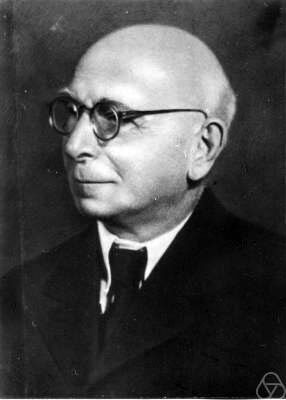
Bernstein inequalities were proven and published by Sergei Bernstein in the 1920s and 1930s. Later, these inequalities were rediscovered several times in various forms. Thus, special cases of the Bernstein inequalities are also known as the Chernoff bound, Hoeffding's inequality and Azuma's inequality.
The martingale case of the Bernstein inequality
is known as Freedman's inequality and its refinement
is known as Hoeffding's inequality.
From the Wikipedia article “Bernstein inequalities (probability theory)” (en.wikipedia.org/wiki/Bernstein_inequalities_(probability_theory)), by its contributors, under CC BY-SA 4.0 (creativecommons.org/licenses/by-sa/4.0/). Copied 2026-11-18; not changed.
Confirmed Two sources agree. Cited One source, and it names where it got it. One source One source, without a reference of its own. Sources disagree The sources disagree. We show the best-supported value and keep theirs below.