Bethe ansatz
Bethe ansatz is an ansatz method for finding the exact solutions of certain one-dimensional quantum many-body models.
All 4 facts, and where they come from
Facts
4 facts · 0 confirmed by two sources · 0 cited · 4 from one source
Where this comes from
Papalocal keeps its own record. It started from these sources; what each one said is kept here as it was copied, so a change on their side never changes this page by itself. Tap one to read its version.
What Wikidata says · copied November 16, 2026 · revision 2515883762
- Described as
- an ansatz method for finding the exact solutions of certain one-dimensional quantum many-body models
- What it is
- ansatz; method; scientific theory
- Named after
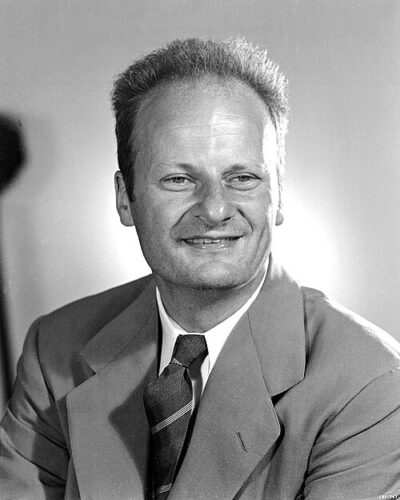
- Hans Bethe
- Wikipedias with a page
- 6
Wikidata item Q831226 (wikidata.org/wiki/Q831226), public domain (CC0). Copied 2026-11-16.
What Wikipedia says · copied November 16, 2026 · revision 1381089860
In physics, the Bethe ansatz is used to calculate the exact wave functions of certain quantum-mechanical many-body systems, most commonly in one spatial dimension. This ansatz was introduced by Hans Bethe in 1931 to obtain the exact eigenvalues and eigenvectors of the one-dimensional antiferromagnetic isotropic (XXX) Heisenberg model.
The approach was later generalized into the quantum inverse scattering method (QISM) and the algebraic Bethe ansatz, forming the basis of modern integrable system theory.
Since then, the method has been extended to other spin chains, statistical lattice models and generalized hydrodynamics.
"Bethe ansatz problems" were one of the topics featuring in the "To learn" section of Richard Feynman's blackboard at the time of his death.
From the Wikipedia article “Bethe ansatz” (en.wikipedia.org/wiki/Bethe_ansatz), by its contributors, under CC BY-SA 4.0 (creativecommons.org/licenses/by-sa/4.0/). Copied 2026-11-16; not changed.
Confirmed Two sources agree. Cited One source, and it names where it got it. One source One source, without a reference of its own. Sources disagree The sources disagree. We show the best-supported value and keep theirs below.