Bethe lattice
Bethe lattice is a regular infinite tree structure used in statistical mechanics.
All 2 facts, and where they come from
Facts
2 facts · 0 confirmed by two sources · 0 cited · 2 from one source
Where this comes from
Papalocal keeps its own record. It started from these sources; what each one said is kept here as it was copied, so a change on their side never changes this page by itself. Tap one to read its version.
What Wikidata says · copied November 16, 2026 · revision 2434948771
- Described as
- regular infinite tree structure used in statistical mechanics
- Other names
- Cayley tree
- What it is
- mathematical concept
- Named after
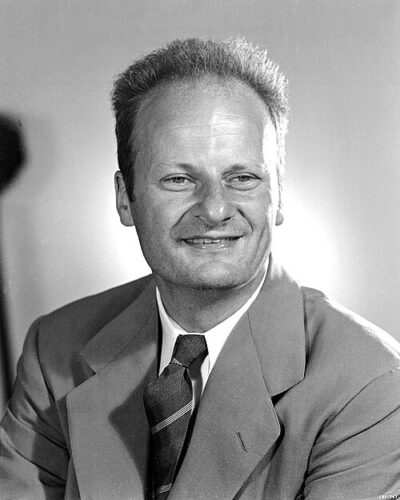
- Hans Bethe
- Wikipedias with a page
- 6
Wikidata item Q794168 (wikidata.org/wiki/Q794168), public domain (CC0). Copied 2026-11-16.
What Wikipedia says · copied November 16, 2026 · revision 1384915798
In statistical mechanics and mathematics, the Bethe lattice (also called a regular tree) is an infinite symmetric regular tree where all vertices have the same number of neighbors. The Bethe lattice was introduced into the physics literature by Hans Bethe in 1935. In such a graph, each node is connected to z neighbors; the number z is called either the coordination number or the degree, depending on the field.
Due to its distinctive topological structure, the statistical mechanics of lattice models on this graph are often easier to solve than on other lattices. The solutions are related to the often used Bethe ansatz for these systems.
From the Wikipedia article “Bethe lattice” (en.wikipedia.org/wiki/Bethe_lattice), by its contributors, under CC BY-SA 4.0 (creativecommons.org/licenses/by-sa/4.0/). Copied 2026-11-16; not changed.
Confirmed Two sources agree. Cited One source, and it names where it got it. One source One source, without a reference of its own. Sources disagree The sources disagree. We show the best-supported value and keep theirs below.