

Big East Conference Women's Basketball Player of the Year
Big East Conference Women's Basketball Player of the Year is an award. It was created in 1983.
- Country
- United States
- Created
- 1983
All 4 facts, and where they come from
Facts
4 facts · 0 confirmed by two sources · 0 cited · 4 from one source
Where this comes from
Papalocal keeps its own record. It started from these sources; what each one said is kept here as it was copied, so a change on their side never changes this page by itself. Tap one to read its version.
What Wikidata says · copied November 16, 2026 · revision 1481575588
- What it is
- award
- Created
- 1983
- Country
- United States
- Sport
- basketball
- Wikipedias with a page
- 2
Wikidata item Q4905619 (wikidata.org/wiki/Q4905619), public domain (CC0). Copied 2026-11-16.
What Wikipedia says · copied November 16, 2026 · revision 1384539390
The Big East Conference Women's Basketball Player of the Year award is given to the women's basketball player in the Big East Conference voted as the top performer by the conference coaches. It was first awarded at the end of the 1982–83 season, the first in which the Big East sponsored women's basketball. The current Big East claims the history of the original Big East Conference, which split along football lines in 2013, with three members leaving to join the Atlantic Coast Conference, the seven members that did not field teams in NCAA Division I FBS leaving to form a new Big East Conference, and the remaining FBS schools continuing to operate under the original Big East charter with the new name of American Athletic Conference (The American).
The head coaches of the league's teams submit their votes following the end of the regular season and before the conference's tournament in early March. The coaches cannot vote for their own players.
The first award went to Debbie Beckford of St. John's in 1983. There have been eight multiple winners so far. Rebecca Lobo and Diana Taurasi, both of UConn; Notre Dame's Skylar Diggins; and Villanova's Maddy Siegrist each won the award twice in their careers. Shelly Pennefather of Villanova and Kerry Bascom, Maya Moore, and Paige Bueckers of UConn were all three-time winners. Pennefather and Bascom won all of their awards consecutively, while Moore and Bueckers did not.
So far, voting has resulted in a tie once, in 1984 when both Jennifer Bruce and Kathy Finn won the award.
Eight players have also won National Player of the Year awards. Rebecca Lobo, Ruth Riley, Sue Bird, Diana Taurasi, Maya Moore, and Paige Bueckers are all recipients of the Naismith College Player of the Year award. Shelly Pennefather, Lobo, Jennifer Rizzotti, Bird, Taurasi, Moore, and Bueckers are all recipients of the Wade Trophy. Moore and Bueckers are also recipients of the John R. Wooden Award.
UConn, a founding member of the original Big East that moved to The American with the conference split and joined the current Big East in 2020, has the most all-time awards, with 21, and the most individual winners, with 13. Apart from UConn, the only current Big East members with more than one winner are Villanova, with three players who combined to win six awards; DePaul, with three players who each won one award; and Creighton and Marquette, each with two players who claimed one award. Three current Big East members have yet to have a winner—Seton Hall, which was a charter member of the Big East in 1979, and Butler and Xavier, both of which joined the Big East at its 2013 relaunch.
From the Wikipedia article “Big East Conference Women's Basketball Player of the Year” (en.wikipedia.org/wiki/Big_East_Conference_Women's_Basketball_Player_of_the_Year), by its contributors, under CC BY-SA 4.0 (creativecommons.org/licenses/by-sa/4.0/). Copied 2026-11-16; not changed.
Confirmed Two sources agree. Cited One source, and it names where it got it. One source One source, without a reference of its own. Sources disagree The sources disagree. We show the best-supported value and keep theirs below.
Picture: Wikimedia Commons · Public domain
People connected 11
Won it
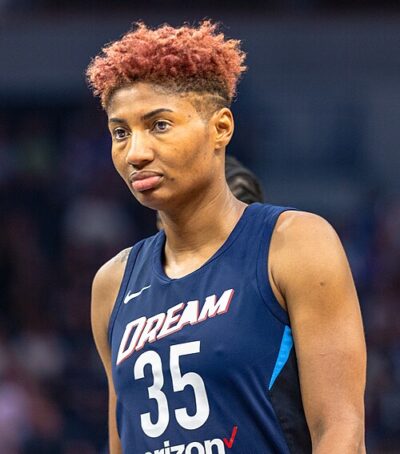 Angel McCoughtry (2007)American basketball player (born 1986)
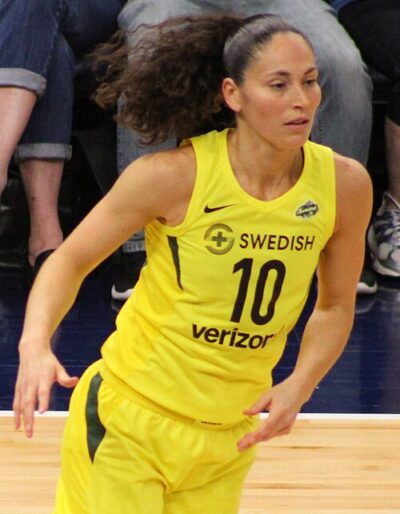 Sue Bird (2002)American basketball player (born 1980)
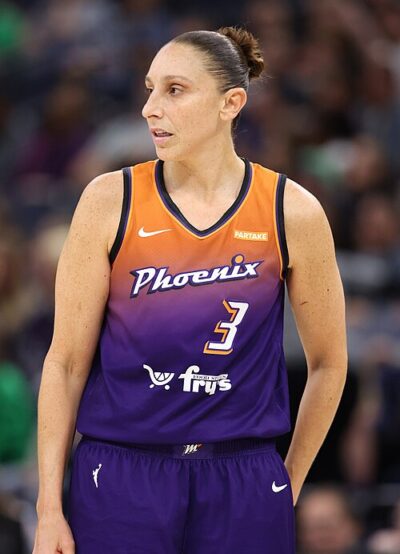 Diana TaurasiAmerican basketball player (born 1982)
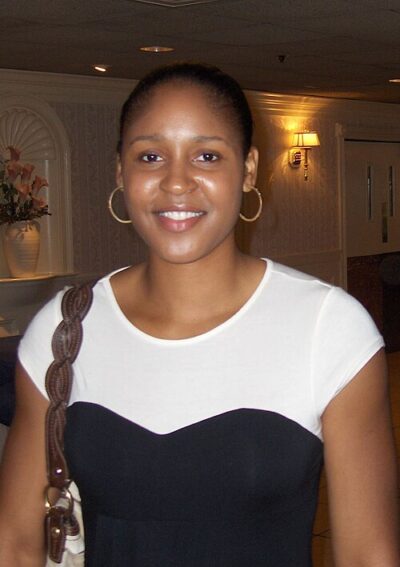 Maya MooreAmerican basketball player (born 1989)
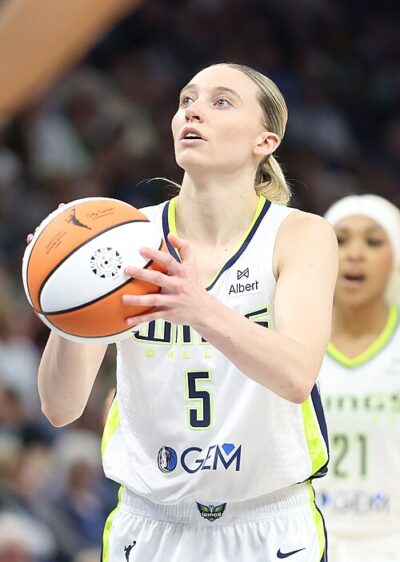 Paige BueckersAmerican basketball player (born 2001)
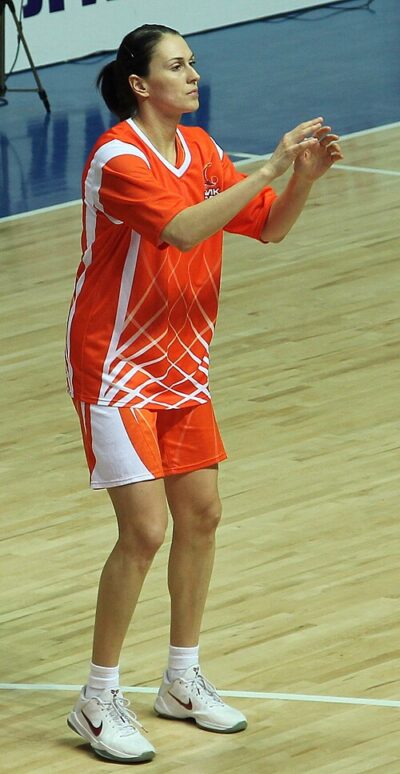 Svetlana AbrosimovaRussian basketball player (born 1980)
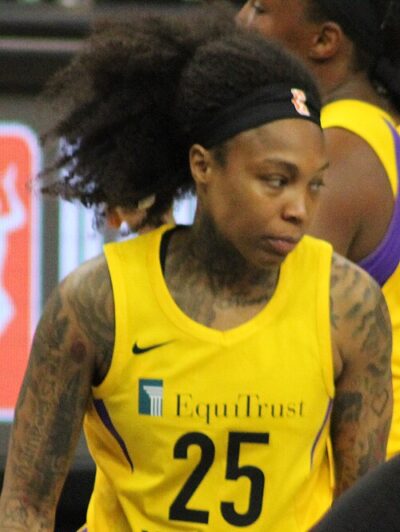 Cappie PondexterAmerican basketball player (born 1983)
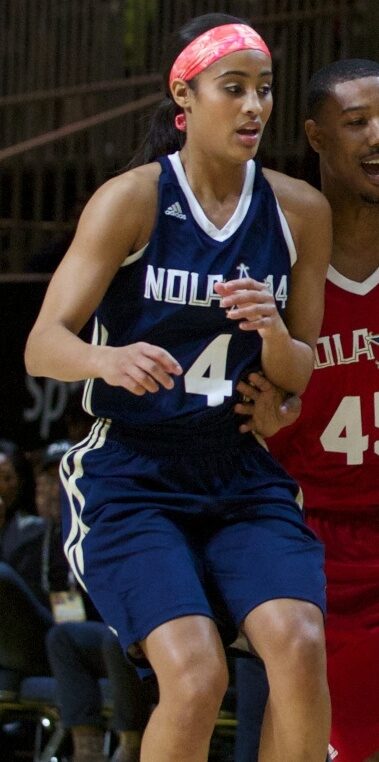 Skylar Diggins-SmithAmerican basketball player (born 1990)
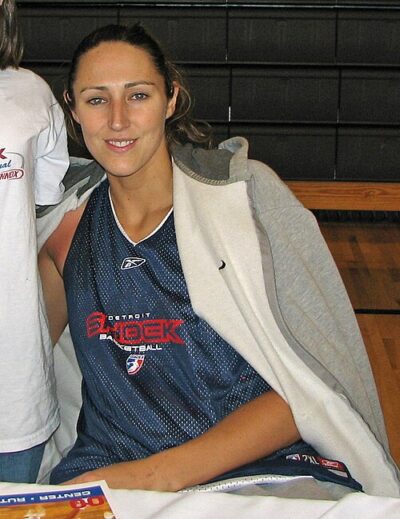 Ruth RileyAmerican basketball player (born 1979)
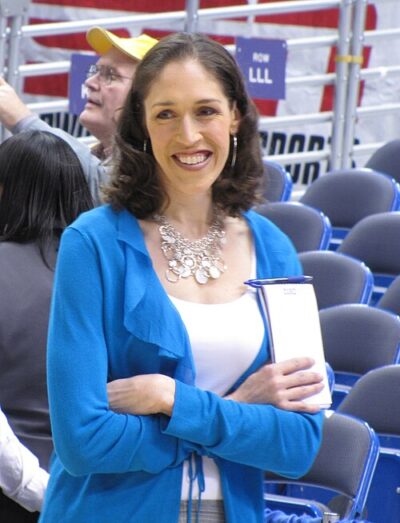 Rebecca LoboAmerican basketball player (born 1973)
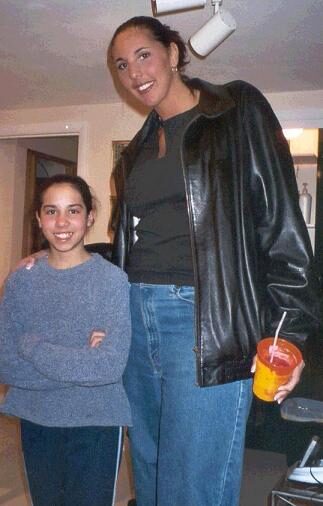 Kara WoltersAmerican basketball player (born 1975)
