big O notation
Big O notation is a form of Landau notation representing asymptotically equivalent or slower growth.
All 3 facts, and where they come from
Facts
3 facts · 0 confirmed by two sources · 0 cited · 3 from one source
Where this comes from
Papalocal keeps its own record. It started from these sources; what each one said is kept here as it was copied, so a change on their side never changes this page by itself. Tap one to read its version.
What Wikidata says · copied November 17, 2026 · revision 2567054282
- Described as
- form of Landau notation representing asymptotically equivalent or slower growth
- Other names
- Landau notation, Bachmann–Landau notation, asymptotic notation, Landau symbol, order comparable with or inferior to, O(), order of, big-O notation
- What it is
- Landau notation; asymptotic behavior
- Named after
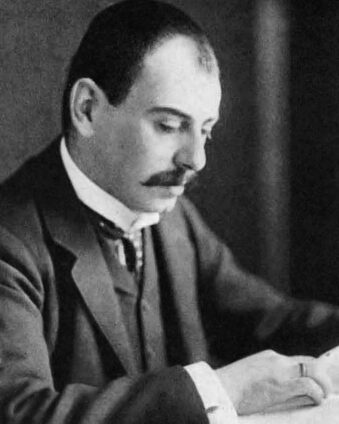
- Edmund Landau
- Wikipedias with a page
- 42
Wikidata item Q269878 (wikidata.org/wiki/Q269878), public domain (CC0). Copied 2026-11-17.
What Wikipedia says · copied November 17, 2026 · revision 1385553141
Big O notation is a mathematical notation that describes the approximate size of a function on a domain. Big O is a member of a family of notations invented by the German mathematicians Paul Bachmann and Edmund Landau and expanded by others, collectively called Bachmann–Landau notation. The letter O stands for Ordnung, that is, the order of approximation.
In computer science, big O notation is used to classify algorithms by how their run time or space requirements grow with the input. In analytic number theory, big O notation expresses bounds on the growth of an arithmetical function, as for the remainder term in the prime number theorem.
In mathematical analysis, including calculus, big O notation bounds the error when truncating a power series and expresses the quality
of approximation of a real or complex valued function by a simpler function.
Often, big O notation characterizes functions according to their growth rates as the variable becomes large: different functions with the same asymptotic growth rate may be represented using the same O notation. The letter O is used because the growth rate of a function is also referred to as the order of the function. A description of a function in terms of big O notation only provides an upper bound on the growth rate of the function.
Associated with big O notation are several related notations, using the symbols o, ∼, Ω, ≪, ≫, ≍, ω, and Θ to describe other kinds of bounds on growth rates.
Bachmann proposed the notation in 1894 and Landau extended it in 1909. An earlier notation was proposed by Paul du Bois-Reymond in 1870.
From the Wikipedia article “Big O notation” (en.wikipedia.org/wiki/Big_O_notation), by its contributors, under CC BY-SA 4.0 (creativecommons.org/licenses/by-sa/4.0/). Copied 2026-11-17; not changed.
Confirmed Two sources agree. Cited One source, and it names where it got it. One source One source, without a reference of its own. Sources disagree The sources disagree. We show the best-supported value and keep theirs below.