Big Ten Conference Women's Basketball Player of the Year
Big Ten Conference Women's Basketball Player of the Year is an annual award to a top female player in American collegiate basketball. It was created in 1983.
- Given by
- Big Ten Conference
- Country
- United States
- Created
- 1983
All 5 facts, and where they come from
Facts
5 facts · 0 confirmed by two sources · 0 cited · 5 from one source
Where this comes from
Papalocal keeps its own record. It started from these sources; what each one said is kept here as it was copied, so a change on their side never changes this page by itself. Tap one to read its version.
What Wikidata says · copied November 17, 2026 · revision 2535460452
- Described as
- annual award to a top female player in American collegiate basketball
- What it is
- sports award
- Created
- 1983
- Country
- United States
- Sport
- basketball
- Given by
- Big Ten Conference
- Wikipedias with a page
- 2
Wikidata item Q20313309 (wikidata.org/wiki/Q20313309), public domain (CC0). Copied 2026-11-17.
What Wikipedia says · copied November 17, 2026 · revision 1386215883
The Big Ten Conference Women's Basketball Player of the Year is a basketball award given to the Big Ten Conference's most outstanding player. The award was first given following the Big Ten's first full season of women's basketball in 1982–83 (although the conference held its first postseason tournament the previous season). The league's head coaches have presented the award since 1983; media members who cover Big Ten women's basketball began presenting their own version of the award in 1996.
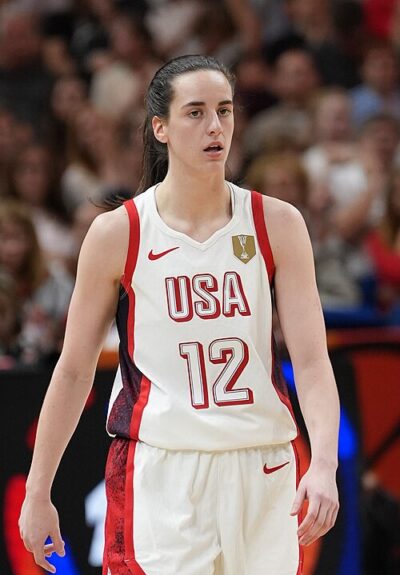
Ten players have won the award multiple times. Six players have won twice: Anucha Browne of Northwestern (1984, 1985), Tracey Hall of Ohio State (1986, 1987), Katie Douglas of Purdue (2000, 2001), Kelly Mazzante of Penn State (2003, 2004), Maggie Lucas of Penn State (2013, 2014), and Megan Gustafson of Iowa (2018, 2019). Four players have won more than two awards. Ohio State's Jantel Lavender is the only four-time winner (2008–2011), though only the 2009 and 2010 awards were unanimous (she won the coaches' award in 2008 and the media award in 2011). Jessica Davenport, also of Ohio State, and Caitlin Clark of Iowa are the only players to have been the unanimous winner of three awards (Davenport: 2005–2007; Clark: 2022–2024). Ohio State's other three-time winner, Kelsey Mitchell, won the coaches' award in 2015 and 2018 and both awards in 2017.
Five players have won a major national player of the year award in the same season in which they were Big Ten Player of the Year. Michelle Edwards of Iowa won the Rawlings/Women Basketball Coaches Association national player of the year award in 1988; Carol Ann Shudlick of Minnesota won the Wade Trophy in 1994; Stephanie White of Purdue won the Wade Trophy and Honda Award in 1999; Megan Gustafson won the Naismith and Honda Awards in 2019, and was also named national player of the year by AP and the United States Basketball Writers Association; and Caitlin Clark won all significant national awards in both 2023 and 2024.
The coaches and media have split their honors six times in all, with the most recent being 2018, when Mitchell won the coaches' award and Gustafson won the media award.
Ohio State has the record for the most awards with 15, and the most individuals who have won the award, with seven. Of schools that were Big Ten members before the 2024–25 season, three have never had a winner: long-established member Indiana, and the two schools that joined the conference in 2014, Maryland and Rutgers. The four schools that joined in 2024 produced the last two winners: USC in 2025 and UCLA in 2026. The other two new members from 2024, Oregon and Washington, have not yet produced a winner.
From the Wikipedia article “Big Ten Conference Women's Basketball Player of the Year” (en.wikipedia.org/wiki/Big_Ten_Conference_Women's_Basketball_Player_of_the_Year), by its contributors, under CC BY-SA 4.0 (creativecommons.org/licenses/by-sa/4.0/). Copied 2026-11-17; not changed.
Confirmed Two sources agree. Cited One source, and it names where it got it. One source One source, without a reference of its own. Sources disagree The sources disagree. We show the best-supported value and keep theirs below.
Picture: Big Ten Conference, via Wikimedia Commons · Public domain