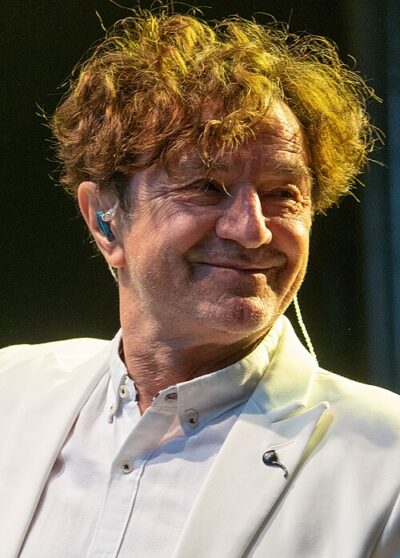
Bijelo Dugme
Bijelo Dugme is a Yugoslavian rock band. It was founded in 1974.
- Founded
- 1974
- Genre
- hard rock
- Record label
- Jugoton
- Country of origin
- Yugoslavia
All 8 facts, and where they come from
Facts
8 facts · 0 confirmed by two sources · 0 cited · 8 from one source
Where this comes from
Papalocal keeps its own record. It started from these sources; what each one said is kept here as it was copied, so a change on their side never changes this page by itself. Tap one to read its version.
What Wikidata says · copied November 17, 2026 · revision 2563882600
- Described as
- Yugoslavian rock band
- What it is
- musical group
- Genre
- hard rock
- Country of origin
- Yugoslavia; Bosnia and Herzegovina
- Record label
- Jugoton
- Founded
- 1974
- Ended
- 1989
- Official website
- http://www.bijelodugme.com.hr/
- Wikipedias with a page
- 28
Wikidata item Q753829 (wikidata.org/wiki/Q753829), public domain (CC0). Copied 2026-11-17.
What Wikipedia says · copied November 17, 2026 · revision 1383258123
Bijelo Dugme (transl. White Button) is a Bosnian and Yugoslav rock band, formed in Sarajevo, SR Bosnia and Herzegovina in 1974. Bijelo Dugme is widely considered to have been the most popular and the best-selling band ever to exist in the former Socialist Federal Republic of Yugoslavia and one of the most prominent acts of the Yugoslav rock scene and Yugoslav popular music in general.
Bijelo Dugme was officially formed in 1974, although the members of its default lineup—guitarist Goran Bregović, vocalist Željko Bebek, drummer Ipe Ivandić, keyboardist Vlado Pravdić and bass guitarist Zoran Redžić—had previously played since 1971 under the name Jutro. In 1974, the band's debut studio album Kad bi' bio bijelo dugme brought them nationwide popularity with its Balkan folk-influenced hard rock sound. The band's subsequent several studio releases, featuring similar sound, maintained their huge popularity, described by the Yugoslav press as "Dugmemanija". Simultaneously, the band's material, especially their progressive rock ballads—with some lyrics written by poet and lyricist Duško Trifunović—was widely praised by music critics. In the early 1980s, with the emergence of the Yugoslav new wave scene, the band moved towards a new wave sound, managing to remain one of the most popular bands in the country.
After the departure of Bebek in 1983, the band hired vocalist Mladen Vojičić Tifa, with whom the band recorded only one, albeit highly successful untitled album. The band's next and final vocalist, Alen Islamović, joined the band in 1986. Bijelo Dugme recorded two albums with him, initiating the short-lived Sarajevo-based New Partisans movement with their blend of folk-influenced pop rock and Yugoslavist-inspired lyrics. The group disbanded in 1989 due to the political crisis in Yugoslavia following the death of Josip Broz Tito, which would end up escalating into the Yugoslav Wars. Its leader, Goran Bregović, continued his career as a successful film music composer and solo artist. In 2005, the band reunited in the lineup that featured most of the musicians that passed through the band, including all three vocalists, for three concerts, in Sarajevo, Bosnia and Herzegovina, in Zagreb, Croatia and in Belgrade, Serbia, the free concert in Belgrade being one of the highest-attended concerts of all time. In 2024, the band had another reunion, with Vojičić and Islamović on vocals, in order to hold its 50th anniversary tour.
Bijelo Dugme is considered to be one of the most influential acts of Yugoslav popular music, with a number of prominent figures of the Yugoslav and post-Yugoslav music scene citing them as an influence. Their works were critically acclaimed at the time of their release and in retrospect, with a number of their albums appearing on various lists of best Yugoslav rock albums, praised for the composition, musicianship, production and poetic quality of the lyrics. On the other hand, the band is often criticized by a part of region's musicians, music critics and audience who believe that the band's blend of rock music and Balkan folk paved the way for the appearance of turbo-folk music in the late 1980s and the 1990s. Bijelo Dugme's work remains popular in all former Yugoslav republics, the band often being considered one of the symbols of Yugoslav culture and their work being a frequent motif in various forms of Yugo-nostalgia.
From the Wikipedia article “Bijelo Dugme” (en.wikipedia.org/wiki/Bijelo_Dugme), by its contributors, under CC BY-SA 4.0 (creativecommons.org/licenses/by-sa/4.0/). Copied 2026-11-17; not changed.
Confirmed Two sources agree. Cited One source, and it names where it got it. One source One source, without a reference of its own. Sources disagree The sources disagree. We show the best-supported value and keep theirs below.
Picture: Wikimedia Commons: Veljko Despot na snimanju s Bijelim dugmetom, Air Studios, London, 1975..jpg · See Commons file page