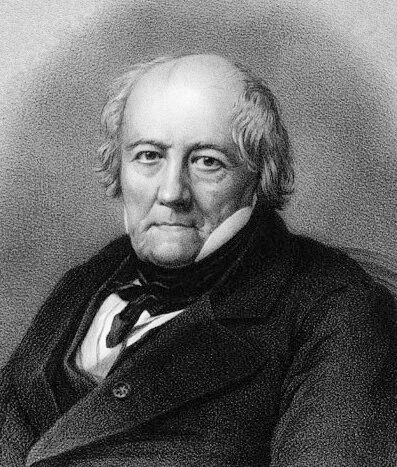
Biot number for heat transfer
Biot number for heat transfer is a characteristic number for heat transfer by conduction into a body.
All 1 facts, and where they come from
Facts
1 facts · 0 confirmed by two sources · 0 cited · 1 from one source
Where this comes from
Papalocal keeps its own record. It started from these sources; what each one said is kept here as it was copied, so a change on their side never changes this page by itself. Tap one to read its version.
What Wikidata says · copied November 17, 2026 · revision 2515886268
- Described as
- characteristic number for heat transfer by conduction into a body
- Other names
- Biot number
- Named after
- Jean-Baptiste Biot
- Wikipedias with a page
- 23
Wikidata item Q864844 (wikidata.org/wiki/Q864844), public domain (CC0). Copied 2026-11-17.
What Wikipedia says · copied November 17, 2026 · revision 1379029256
The Biot number (Bi) is a dimensionless quantity used in heat transfer calculations, named for the eighteenth-century French physicist Jean-Baptiste Biot (1774–1862). The Biot number is the ratio of the thermal resistance for conduction inside a body to the resistance for convection at the surface of the body. This ratio indicates whether the temperature inside a body varies significantly in space when the body is heated or cooled over time by a heat flux at its surface.
In general, problems involving small Biot numbers (much smaller than 1) are analytically simple, as a result of nearly uniform temperature fields inside the body. Biot numbers of order one or greater indicate more difficult problems with nonuniform temperature fields inside the body.
The Biot number appears in a number of heat transfer problems, including transient heat conduction and fin heat transfer calculations.
From the Wikipedia article “Biot number” (en.wikipedia.org/wiki/Biot_number), by its contributors, under CC BY-SA 4.0 (creativecommons.org/licenses/by-sa/4.0/). Copied 2026-11-17; not changed.
Confirmed Two sources agree. Cited One source, and it names where it got it. One source One source, without a reference of its own. Sources disagree The sources disagree. We show the best-supported value and keep theirs below.