Bleak House
Bleak House is a novel by Charles Dickens (1853).
- Published
- 1853
- Came out
- 1852
- Written by
- Charles Dickens
- Genre
- detective fiction
- Country of origin
- England
All 10 facts, and where they come from
Facts
10 facts · 0 confirmed by two sources · 0 cited · 10 from one source
Where this comes from
Papalocal keeps its own record. It started from these sources; what each one said is kept here as it was copied, so a change on their side never changes this page by itself. Tap one to read its version.
What Wikidata says · copied November 17, 2026 · revision 2555872171
- Described as
- novel by Charles Dickens (1853)
- What it is
- literary work
- Written by
- Charles Dickens
- Publisher
- Chapman and Hall
- Genre
- detective fiction
- Published
- 1853
- Language
- English
- Country of origin
- England
- Comes after
- David Copperfield
- Followed by
- A Child's History of England · 1 reference
- Came out
- 1852
- Wikipedias with a page
- 38
Wikidata item Q883305 (wikidata.org/wiki/Q883305), public domain (CC0). Copied 2026-11-17.
What Wikipedia says · copied November 17, 2026 · revision 1384227832
Bleak House is a novel by the English author Charles Dickens, first published as a 20-episode serial between 12 March 1852 and 12 September 1853. The novel has many characters and several subplots, and is told partly by the novel's heroine, Esther Summerson, and partly by an omniscient narrator. At the centre of Bleak House is a long-running legal case in the Court of Chancery, Jarndyce and Jarndyce, which comes about because a testator has written several conflicting wills. In a preface to the 1853 first edition, Dickens said there were many actual precedents for his fictional case. One such was probably Thellusson v Woodford, in which a will read in 1797 was contested and not determined until 1859. Though many in the legal profession criticised Dickens's satire as exaggerated, Bleak House helped support a judicial reform movement that culminated in the enactment of legal reform in the 1870s.
Some scholars debate when Bleak House is set. The English legal historian Sir William Holdsworth sets the action in 1827; however, reference to preparation for the building of a railway in Chapter LV suggests the 1830s. A work of Gothic fiction depicting London as a murky city swathed in fog, Bleak House is credited with introducing urban fog to the novel, which would become a frequent characteristic of urban Gothic literature and film. Released in 1901, the Bleak House-inspired The Death of Poor Joe is the earliest filmed adaptation of a Dickens work.
From the Wikipedia article “Bleak House” (en.wikipedia.org/wiki/Bleak_House), by its contributors, under CC BY-SA 4.0 (creativecommons.org/licenses/by-sa/4.0/). Copied 2026-11-17; not changed.
Confirmed Two sources agree. Cited One source, and it names where it got it. One source One source, without a reference of its own. Sources disagree The sources disagree. We show the best-supported value and keep theirs below.
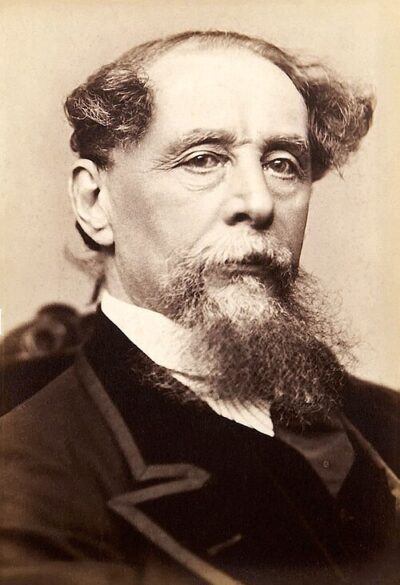
Picture: Wikimedia Commons: Cover, Bleak House (1852-3).png · See Commons file page