Boolean function
Boolean function is an any mathematical function with Boolean arguments and result.
All 2 facts, and where they come from
Facts
2 facts · 0 confirmed by two sources · 0 cited · 2 from one source
Where this comes from
Papalocal keeps its own record. It started from these sources; what each one said is kept here as it was copied, so a change on their side never changes this page by itself. Tap one to read its version.
What Wikidata says · copied November 17, 2026 · revision 2547076852
- Described as
- any mathematical function with Boolean arguments and result
- Other names
- Boolean operation, logic function
- What it is
- mathematical concept
- Named after
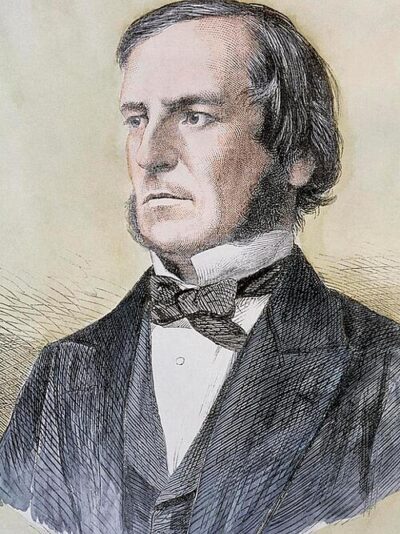
- George Boole
- Wikipedias with a page
- 26
Wikidata item Q942353 (wikidata.org/wiki/Q942353), public domain (CC0). Copied 2026-11-17.
What Wikipedia says · copied November 17, 2026 · revision 1360621070
In mathematics, a Boolean function is a function whose arguments and result assume values from a two-element set (usually {true, false}, {0,1} or {−1,1}). Alternative names are switching function, used especially in older computer science literature, and truth function (or logical function), used in logic. Boolean functions are the subject of Boolean algebra and switching theory.
A Boolean function takes the form f:{0,1}k→{0,1}, where {0,1} is known as the Boolean domain and k is a non-negative integer called the arity of the function. In the case where k=0, the function is a constant element of {0,1}. A Boolean function with multiple outputs, f:{0,1}k→{0,1}m with m>1 is a vectorial or vector-valued Boolean function (an S-box in symmetric cryptography).
There are 22k different Boolean functions with k arguments; equal to the number of different truth tables with 2k entries.
Every k-ary Boolean function can be expressed as a propositional formula in k variables x1,...,xk, and two propositional formulas are logically equivalent if and only if they express the same Boolean function.
From the Wikipedia article “Boolean function” (en.wikipedia.org/wiki/Boolean_function), by its contributors, under CC BY-SA 4.0 (creativecommons.org/licenses/by-sa/4.0/). Copied 2026-11-17; not changed.
Confirmed Two sources agree. Cited One source, and it names where it got it. One source One source, without a reference of its own. Sources disagree The sources disagree. We show the best-supported value and keep theirs below.