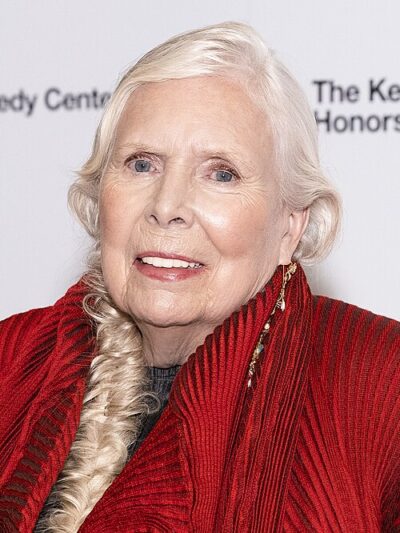
Both Sides Now
Both Sides Now is an original song written, composed and recorded by Joni Mitchell. It came out in 1966. It is performed by Judy Collins and Frank Sinatra.
- Released
- 1966
- Performed by
- Judy Collins
- Genre
- folk rock
All 9 facts, and where they come from
Facts
9 facts · 0 confirmed by two sources · 1 cited · 8 from one source
Where this comes from
Papalocal keeps its own record. It started from these sources; what each one said is kept here as it was copied, so a change on their side never changes this page by itself. Tap one to read its version.
What Wikidata says · copied November 16, 2026 · revision 2570102796
- Described as
- original song written, composed and recorded by Joni Mitchell
- Other names
- Both Sides, Now
- What it is
- musical work/composition
- Performed by
- Judy Collins · 1 reference; Frank Sinatra · 1 reference; Joni Mitchell; Roger Whittaker · 1 reference
- Music by
- Joni Mitchell · 1 reference
- Genre
- folk rock · 1 reference
- Released
- 1966 · 1 reference
- Language
- English · 1 reference
- Wikipedias with a page
- 16
Wikidata item Q2707288 (wikidata.org/wiki/Q2707288), public domain (CC0). Copied 2026-11-16.
What Wikipedia says · copied November 16, 2026 · revision 1385539454
"Both Sides, Now" is a song by Canadian singer-songwriter Joni Mitchell. One of the first recordings is by Judy Collins, whose version appeared on the US singles chart during the fall of 1968. The next year it was included on Mitchell's album Clouds, and became one of her best-known songs. In 1991 Mitchell re-recorded the song with an orchestral arrangement on her 2000 album Both Sides Now.
In 2004, Rolling Stone ranked "Both Sides, Now" at number 170 on its list of the 500 Greatest Songs.
From the Wikipedia article “Both Sides, Now” (en.wikipedia.org/wiki/Both_Sides,_Now), by its contributors, under CC BY-SA 4.0 (creativecommons.org/licenses/by-sa/4.0/). Copied 2026-11-16; not changed.
Confirmed Two sources agree. Cited One source, and it names where it got it. One source One source, without a reference of its own. Sources disagree The sources disagree. We show the best-supported value and keep theirs below.