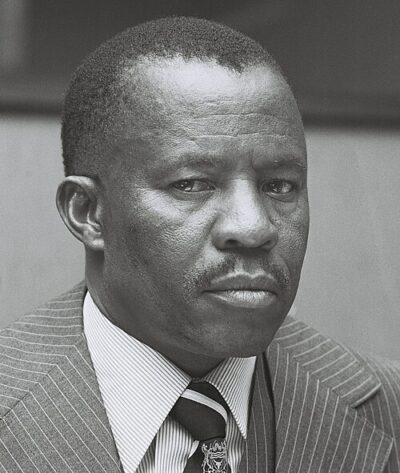
Botswana Democratic Party
The Botswana Democratic Party is a political party. It was founded in 1962. Its headquarters are in Gaborone. It stands for paternalistic conservatism and economic nationalism.
- Country
- Botswana
- Founded
- February 28, 1962
- Ideology
- paternalistic conservatism
- Chair
- Daniel Kwelagobe
All 9 facts, and where they come from
Facts
9 facts · 0 confirmed by two sources · 0 cited · 9 from one source
Where this comes from
Papalocal keeps its own record. It started from these sources; what each one said is kept here as it was copied, so a change on their side never changes this page by itself. Tap one to read its version.
What Wikidata says · copied November 17, 2026 · revision 2550090261
- Described as
- political party
- Other names
- BDP, Bechuanaland Democratic Party
- What it is
- political party
- Followed by
- Botswana Patriotic Front
- Founded
- February 28, 1962
- Headquarters
- Gaborone
- Country
- Botswana
- Chair
- Daniel Kwelagobe
- Ideology
- paternalistic conservatism; economic nationalism
- Official website
- https://www.bdp.org.bw/
- Wikipedias with a page
- 20
Wikidata item Q859825 (wikidata.org/wiki/Q859825), public domain (CC0). Copied 2026-11-17.
What Wikipedia says · copied November 17, 2026 · revision 1385521305
The Botswana Democratic Party (abbr. BDP, colloquially known as Domkrag) is a centre-right political party in Botswana. From the country's inaugural election in 1965 until the 2024 general election, the party governed the country without interruption for 58 years. At the time of its defeat, the BDP was the longest continuous ruling party in the democratic world.
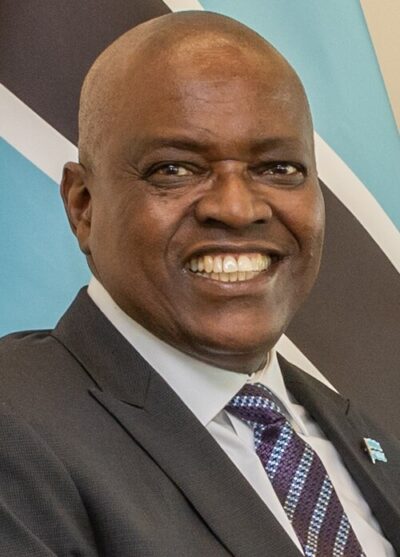
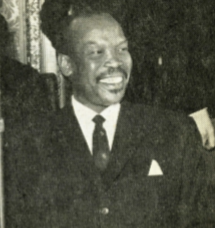
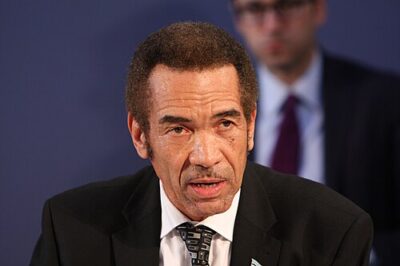
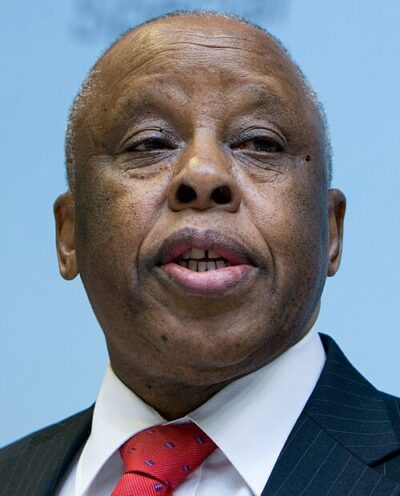
The party was founded in February 1962 as the Bechuanaland Democratic Party while the country was a British protectorate. It adopted its current name following Botswana's independence in 1966. In its beginnings, it was led by Seretse Khama, the country's first president and his successor Quett Masire. Subsequent presidents of Botswana, Festus Mogae, Ian Khama and Mokgweetsi Masisi, have chaired the party. The party won an overwhelming majority in the first elections under universal suffrage in 1965, leading Khama to become the first president of the new state, a position he held until his death in 1980. The BDP enjoyed virtually unquestioned hegemony for the next three decades, benefiting from the relative success of its economic policy and its pragmatic management of the relations between the different tribal groups of the country. Beginning in the late 1980s, the country's increasing urbanization and the emergence of a middle class less influenced by tribal relations weakened the BDP's support base and strengthened its opponents, while a growing economic slowdown in the 1990s caused the party to suffer harsh electoral setbacks; this led it to implement numerous reforms in an attempt to avoid exacerbating political polarization in the country. In subsequent elections, the BDP retained power with less support, largely benefiting from the first-past-the-post voting and facing an opposition plagued by constant divisions.
Although its sources of voters have varied over the years and itself has suffered some splits that gave rise to other opposition parties, such as the liberal Botswana Movement for Democracy (BMD) and the populist Botswana Patriotic Front (BPF), the BDP did not see its hegemony seriously threatened for much of its rule and won every election held since the introduction of universal suffrage in 1965 until 2024. Under its long government, elections in Botswana were considered credible and transparent by the international community.
From independence until the late 2010s, the BDP was particularly strong in the Central District, Seretse Khama's home region and the territory of the Ngwato tribe, while it became weak in urban areas, the North-West and the South. During the presidency of Ian Khama (2008–2018), a polarizing figure within the party itself, the BDP suffered considerable internal crises that led to the formation of the BMD in 2010. The presidency of Mokgweetsi Masisi saw the beginning of a change in Botswana's political landscape, with the departure of Ian Khama from the BDP and the subsequent formation of the pro-Khama Botswana Patriotic Front, which quickly established a sizeable base in the Central District. This led the BDP to lose its traditional dominance in the region and for the first time in history, the opposition managed to win seats there. At the same time, the BDP experienced an unprecedented resurgence in urban areas—largely hostile to Khama—which enabled the party to secure victories in the south and major cities during the 2019 elections. This allowed the BDP to offset its losses in the Central District, ultimately gaining a net seat and retaining its parliamentary majority.
Having been a party of power for nearly six decades, the BDP's ideology is considered by political analysts to be a party with an amorphous character, although in essence, it can be seen as a paternalistic conservative party that defends positions linked to traditionalism, economic nationalism, the market economy, the welfare state and multiparty liberal democracy. The party's historical voter base has been tribal communities, which has, in turn, led the BDP to mirror their conservative views. The internal democratization of the party since 1998 has since increased its ideological breadth.
From the Wikipedia article “Botswana Democratic Party” (en.wikipedia.org/wiki/Botswana_Democratic_Party), by its contributors, under CC BY-SA 4.0 (creativecommons.org/licenses/by-sa/4.0/). Copied 2026-11-17; not changed.
Confirmed Two sources agree. Cited One source, and it names where it got it. One source One source, without a reference of its own. Sources disagree The sources disagree. We show the best-supported value and keep theirs below.