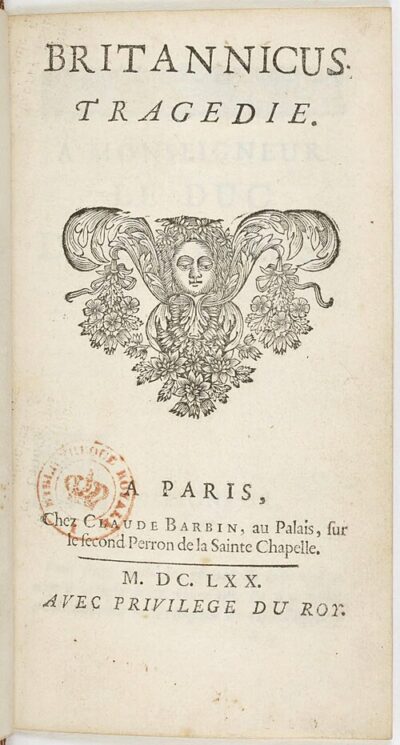
Britannicus
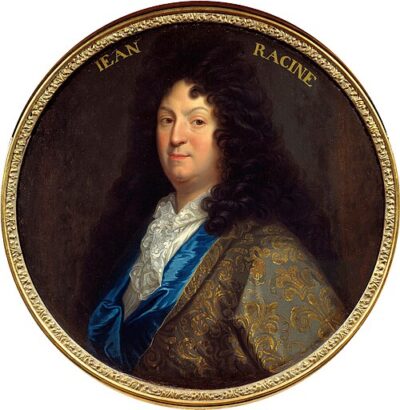
Britannicus is a tragic play by Jean Racine. It came out in 2026.
- Published
- 2026
- Written by
- Jean Racine
- Genre
- tragedy
- Country of origin
- France
All 7 facts, and where they come from
Facts
7 facts · 0 confirmed by two sources · 1 cited · 6 from one source
Where this comes from
Papalocal keeps its own record. It started from these sources; what each one said is kept here as it was copied, so a change on their side never changes this page by itself. Tap one to read its version.
What Wikidata says · copied November 17, 2026 · revision 2493679136
- Described as
- tragic play by Jean Racine
- Other names
- British
- What it is
- literary work
- Written by
- Jean Racine
- Genre
- tragedy
- Published
- 2026 · 1 reference
- Language
- French
- Country of origin
- France
- Named after
- Britannicus
- Wikipedias with a page
- 12
Wikidata item Q1196012 (wikidata.org/wiki/Q1196012), public domain (CC0). Copied 2026-11-17.
What Wikipedia says · copied November 17, 2026 · revision 1301181877
Britannicus is a five-act tragic play by the French dramatist Jean Racine. It was first performed on 13 December 1669 at the Hôtel de Bourgogne in Paris.
Britannicus is the first play in which Racine depicted Roman history. The tale of moral choice takes as its subject Britannicus, the son of the Roman emperor Claudius, and heir to the imperial throne. Britannicus' succession to the throne is however usurped by Lucius, later known as Nero, and the son of Claudius' wife Agrippina the Younger.
Racine portrays Nero's true nature as revealed by his sudden desire for Britannicus's fiancée Junia. He wrests himself free from his mother's domination and plots to assassinate his adoptive brother. Nero is driven less by fear of being overthrown by Britannicus than by competition in love. His desire for Junia manifests itself in sadism towards the young woman and all that she loves. Agrippina is portrayed as a possessive mother who will not accept the loss of control over both her son and the Empire. Despite giving his name to the play, the character of Britannicus is more minor than those of Agrippina and Nero.
Success only came to the play slowly, but of Racine's works, Britannicus is today second only to Andromaque amongst the repertory of the Comédie-Française, and is frequently studied in high school.
From the Wikipedia article “Britannicus (play)” (en.wikipedia.org/wiki/Britannicus_(play)), by its contributors, under CC BY-SA 4.0 (creativecommons.org/licenses/by-sa/4.0/). Copied 2026-11-17; not changed.
Confirmed Two sources agree. Cited One source, and it names where it got it. One source One source, without a reference of its own. Sources disagree The sources disagree. We show the best-supported value and keep theirs below.
Picture: Jean Racine, via Wikimedia Commons · CC0