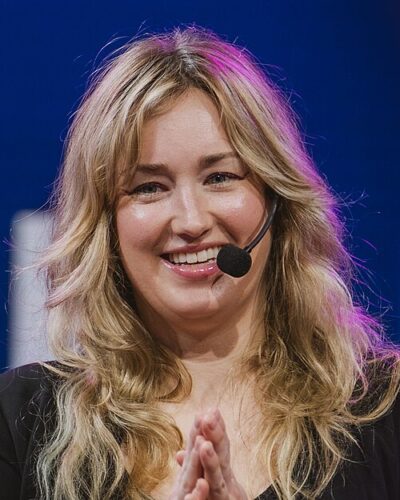
British Academy Games Award for Performer
British Academy Games Award for Performer is a video game award. It was created in 2012.
- Country
- United Kingdom
- Created
- 2012
All 4 facts, and where they come from
Facts
4 facts · 0 confirmed by two sources · 0 cited · 4 from one source
Where this comes from
Papalocal keeps its own record. It started from these sources; what each one said is kept here as it was copied, so a change on their side never changes this page by itself. Tap one to read its version.
What Wikidata says · copied November 16, 2026 · revision 2555274184
- Described as
- video game award
- Other names
- BAFTA Games Award for Performer, British Academy Games Award for Best Performer, BAFTA Games Award for Best Performer
- What it is
- class of award; video game award
- Created
- 2012
- Country
- United Kingdom · 1 reference
- Wikipedias with a page
- 2
Wikidata item Q19650475 (wikidata.org/wiki/Q19650475), public domain (CC0). Copied 2026-11-16.
What Wikipedia says · copied November 16, 2026 · revision 1382486856
The British Academy Video Games Award for Performer is an award presented annually by the British Academy of Film and Television Arts (BAFTA) in honor of the best performance featured in a game "from voice artistry through to motion capture by a performer".
The award was first given at the 8th British Academy Video Games Awards ceremony in 2012, with Mark Hamill winning for his performance as the Joker in Batman: Arkham City. The performer with the most awards is Ashley Johnson with two, one each for her portrayal of Ellie in both The Last of Us and The Last of Us: Left Behind. Troy Baker and Nolan North received the most nominations with three.
Since 2019, the award has been split into "Performer in a Leading Role" and "Performer in a Supporting Role".
From the Wikipedia article “British Academy Games Award for Performer” (en.wikipedia.org/wiki/British_Academy_Games_Award_for_Performer), by its contributors, under CC BY-SA 4.0 (creativecommons.org/licenses/by-sa/4.0/). Copied 2026-11-16; not changed.
Confirmed Two sources agree. Cited One source, and it names where it got it. One source One source, without a reference of its own. Sources disagree The sources disagree. We show the best-supported value and keep theirs below.