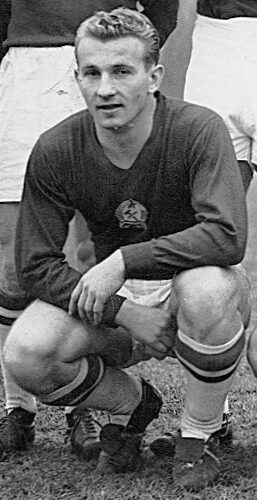
Budapesti VSC
Budapesti VSC is a sports club in Hungary. It was founded in 1911. It plays water polo in the Nemzeti Bajnokság I. Its home is Szőnyi úti Stadion.
- Sport
- water polo
- League
- Nemzeti Bajnokság I (1958–1960)
- Home venue
- Szőnyi úti Stadion
- Founded
- 1911
All 9 facts, and where they come from
Facts
9 facts · 0 confirmed by two sources · 0 cited · 9 from one source
Where this comes from
Papalocal keeps its own record. It started from these sources; what each one said is kept here as it was copied, so a change on their side never changes this page by itself. Tap one to read its version.
What Wikidata says · copied November 17, 2026 · revision 2523191117
- Described as
- sports club in Hungary
- Other names
- BVSC
- What it is
- association football club
- Founded
- 1911
- Headquarters
- Hungary
- Country
- Hungary
- Sport
- water polo; association football
- League
- Nemzeti Bajnokság I (1958–1960) · 1 reference
- Home venue
- Szőnyi úti Stadion
- Official website
- https://bvsc.hu/
- Wikipedias with a page
- 17
Wikidata item Q851233 (wikidata.org/wiki/Q851233), public domain (CC0). Copied 2026-11-17.
What Wikipedia says · copied November 17, 2026 · revision 1378430259
Budapesti Vasutas Sport Club-Zugló commonly known as BVSC-Zugló is a professional football club based in Zugló, Budapest, Hungary, that competes in the Nemzeti Bajnokság II.
The club was founded in 1911. Its football section became closed in 2001, but has now reopened, while other sections that are still operational are table tennis, wrestling, water polo. The table tennis department won the European Cup of 1980 and several national championships.
The football team reached in the years 1996 and 1997 twice the Hungarian Cup final and was runner up in the national championship in 1996.
From the Wikipedia article “Budapesti VSC” (en.wikipedia.org/wiki/Budapesti_VSC), by its contributors, under CC BY-SA 4.0 (creativecommons.org/licenses/by-sa/4.0/). Copied 2026-11-17; not changed.
Confirmed Two sources agree. Cited One source, and it names where it got it. One source One source, without a reference of its own. Sources disagree The sources disagree. We show the best-supported value and keep theirs below.