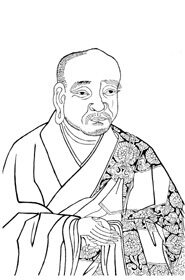
Buddhacharita
Buddhacharita is a Sanskrit Buddhist epic describing the life of the Buddha. It was written by Aśvaghoṣa and Ramchandra Shukla.
- Written by
- Aśvaghoṣa
- Genre
- epic poem
All 5 facts, and where they come from
Facts
5 facts · 0 confirmed by two sources · 0 cited · 5 from one source
Where this comes from
Papalocal keeps its own record. It started from these sources; what each one said is kept here as it was copied, so a change on their side never changes this page by itself. Tap one to read its version.
What Wikidata says · copied November 17, 2026 · revision 2507446312
- Described as
- Sanskrit Buddhist epic describing the life of the Buddha
- Other names
- Life of the Buddha
- What it is
- literary work
- Written by
- Aśvaghoṣa; Ramchandra Shukla
- Genre
- epic poem
- Language
- Sanskrit
- Wikipedias with a page
- 25
Wikidata item Q2280431 (wikidata.org/wiki/Q2280431), public domain (CC0). Copied 2026-11-17.
What Wikipedia says · copied November 17, 2026 · revision 1383798241
Buddhacharita (Sanskrit: बुद्धचरितम्, romanized: Buddhacaritam; transl. Acts of the Buddha) is an epic poem in the Sanskrit mahakavya style on the life of Gautama Buddha by Aśvaghoṣa of Sāketa (modern Ayodhya), composed in the early second century CE.
The author has prepared an account of the Buddha's life and teachings which, unlike other treatments such as Mahavastu (“Great Story”) and Lalitavistara (“Full Description of the Play [of the Buddha]”), is not only artistically arranged but also restrained in the description of the miracles of Gautam Buddha. His work also reflects a vast knowledge of Indian mythology and pre-Buddhist philosophy, as well as a court poet's interest in love, war, and statecraft.
Of the poem's 28 cantos, only the first 14 are extant in Sanskrit (cantos 15 to 28 are in incomplete form). But in Chinese (5th century) and Tibetan translations, all 28 chapters are preserved. In 420 AD, Dharmakṣema made a Chinese translation, and in the 7th or 8th century, a Tibetan version was composed by an unknown author which "appears to be much closer to the original Sanskrit than the Chinese."
From the Wikipedia article “Buddhacharita” (en.wikipedia.org/wiki/Buddhacharita), by its contributors, under CC BY-SA 4.0 (creativecommons.org/licenses/by-sa/4.0/). Copied 2026-11-17; not changed.
Confirmed Two sources agree. Cited One source, and it names where it got it. One source One source, without a reference of its own. Sources disagree The sources disagree. We show the best-supported value and keep theirs below.