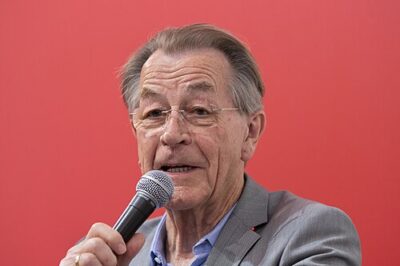
Cabinet Schröder I
Cabinet Schröder I is a Cabinet of the German Federal Government headed by Chancellor Gerhard Schröder (1998–2002).
- Founded
- October 27, 1998
- Country
- Germany
All 8 facts, and where they come from
Facts
8 facts · 0 confirmed by two sources · 0 cited · 8 from one source
Where this comes from
Papalocal keeps its own record. It started from these sources; what each one said is kept here as it was copied, so a change on their side never changes this page by itself. Tap one to read its version.
What Wikidata says · copied November 17, 2026 · revision 2566209635
- Described as
- Cabinet of the German Federal Government headed by Chancellor Gerhard Schröder (1998–2002)
- What it is
- Government of the Federal Republic of Germany
- Comes after
- Cabinet Kohl V
- Followed by
- Cabinet Schröder II
- Founded
- October 27, 1998
- Ended
- October 17, 2002
- Country
- Germany
- Office of
- Germany
- Named after
- Gerhard Schröder
- Wikipedias with a page
- 16
Wikidata item Q663009 (wikidata.org/wiki/Q663009), public domain (CC0). Copied 2026-11-17.
What Wikipedia says · copied November 17, 2026 · revision 1363895664
The First Schröder cabinet (German: Kabinett Schröder I) was the 19th Government of Federal Republic of Germany in office from 27 October 1998 until 22 October 2002. It succeeded the Fifth Kohl cabinet formed after the 1998 elections. Gerhard Schröder, Minister President of Lower Saxony, reached an agreement on a coalition with the Alliance 90/The Greens (Greens) and his Social Democratic Party (SPD), setting the stage for Schröder to become Chancellor of Germany. Joschka Fischer (Greens) replaced Klaus Kinkel (FDP) as Vice-Chancellor of Germany and Federal Minister of Foreign Affairs. The cabinet was succeeded by the Second Schröder cabinet.
From the Wikipedia article “First Schröder cabinet” (en.wikipedia.org/wiki/First_Schröder_cabinet), by its contributors, under CC BY-SA 4.0 (creativecommons.org/licenses/by-sa/4.0/). Copied 2026-11-17; not changed.
Confirmed Two sources agree. Cited One source, and it names where it got it. One source One source, without a reference of its own. Sources disagree The sources disagree. We show the best-supported value and keep theirs below.