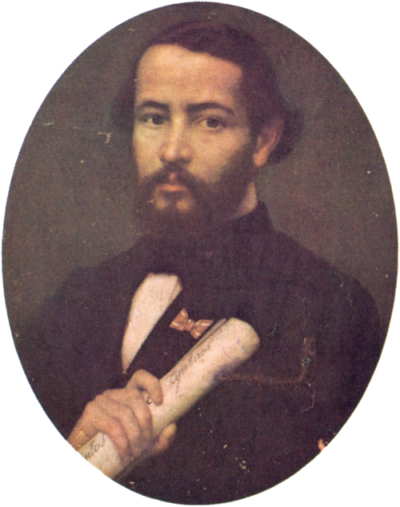
Canção do exílio
Canção do exílio is a literary work. It was written by Gonçalves Dias.
- Written by
- Gonçalves Dias
- Genre
- lyric poetry
- Country of origin
- Brazil
All 5 facts, and where they come from
Facts
5 facts · 0 confirmed by two sources · 0 cited · 5 from one source
Where this comes from
Papalocal keeps its own record. It started from these sources; what each one said is kept here as it was copied, so a change on their side never changes this page by itself. Tap one to read its version.
What Wikidata says · copied November 18, 2026 · revision 2550198464
- Described as
- poem
- What it is
- literary work
- Written by
- Gonçalves Dias
- Genre
- lyric poetry; artistic indianism
- Country of origin
- Brazil
- Wikipedias with a page
- 5
Wikidata item Q644528 (wikidata.org/wiki/Q644528), public domain (CC0). Copied 2026-11-18.
What Wikipedia says · copied November 18, 2026 · revision 1316261917
Canção do Exílio (Portuguese pronunciation: [kɐ̃ˈsɐ̃w dweˈzilju], Song of Exile) is a poem written by the Brazilian Romantic author Gonçalves Dias in 1843, when he was in Portugal studying Law at the University of Coimbra. The poem is a famous example of the first phase of Brazilian Romanticism, which was characterized by strong nationalism and patriotism.
The poem first appeared in Dias' book Primeiros Cantos (First Chants), published in 1846. It was influenced by and loosely based on Johann Wolfgang von Goethe's ballad Mignon, and some verses of the ballad are used as the poem's epigraph.
Canção do Exílio is one of the most famous poems of Brazilian literature, being referenced and/or parodied by many other Brazilian authors. The lines "Nossos bosques têm mais vida,/Nossa vida mais amores" were later included in the national anthem of Brazil as a tribute to Dias.
From the Wikipedia article “Canção do Exílio” (en.wikipedia.org/wiki/Canção_do_Exílio), by its contributors, under CC BY-SA 4.0 (creativecommons.org/licenses/by-sa/4.0/). Copied 2026-11-18; not changed.
Confirmed Two sources agree. Cited One source, and it names where it got it. One source One source, without a reference of its own. Sources disagree The sources disagree. We show the best-supported value and keep theirs below.
Picture: Wikimedia Commons: Poesia Gonçálves Dias.JPG · See Commons file page