Carmen
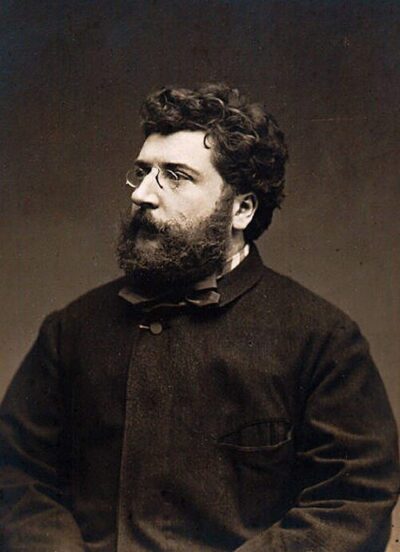
Carmen is an opera in four acts by French composer Georges Bizet. It came out in 1875.
- Released
- 19th century
- Came out
- 1875
- Written by
- Georges Bizet
- Genre
- opéra comique
All 10 facts, and where they come from
Facts
10 facts · 0 confirmed by two sources · 2 cited · 8 from one source
Where this comes from
Papalocal keeps its own record. It started from these sources; what each one said is kept here as it was copied, so a change on their side never changes this page by itself. Tap one to read its version.
What Wikidata says · copied November 17, 2026 · revision 2567713637
- Described as
- opera in four acts by French composer Georges Bizet
- What it is
- dramatico-musical work
- Written by
- Georges Bizet
- Music by
- Georges Bizet · 1 reference
- Genre
- opéra comique; opera · 1 reference; French opera
- Released
- 19th century
- Language
- French
- Based on
- Carmen
- Came out
- 1875
- Wikipedias with a page
- 75
Wikidata item Q185968 (wikidata.org/wiki/Q185968), public domain (CC0). Copied 2026-11-17.
What Wikipedia says · copied November 17, 2026 · revision 1384064631
Carmen (French: [kaʁmɛn] ) is an opera in four acts by the French composer Georges Bizet. The libretto was written by Henri Meilhac and Ludovic Halévy, based on the novella of the same title by Prosper Mérimée. The opera was first performed by the Opéra-Comique in Paris on 3 March 1875, where its breaking of conventions shocked and scandalised its first audiences. Bizet died suddenly after the 33rd performance, unaware that the work would achieve international acclaim within the following ten years. Carmen has since become one of the most popular and frequently performed operas in the classical canon; the "Habanera" and "Seguidilla" from act 1 and the "Toreador Song" from act 2 are among the best known of all operatic arias.
The opera is written in the genre of opéra comique with musical numbers separated by dialogue. It is set in southern Spain and tells the story of the downfall of Don José, a naïve soldier who is seduced by the wiles of the fiery gypsy Carmen. José abandons his childhood sweetheart and deserts from his military duties, yet loses Carmen's love to the glamorous torero Escamillo, after which José kills her in a jealous rage. The depictions of proletarian life, immorality, and lawlessness, and the murder of the main character on stage, broke new ground in French opera and were highly controversial.
After the premiere, most reviews were critical, and the French public was generally indifferent. Carmen initially gained its reputation through a series of productions outside France, and was not revived in Paris until 1883. Thereafter, it rapidly acquired popularity at home and abroad. Later commentators have asserted that Carmen forms the bridge between the tradition of opéra comique and the realism or verismo that characterised late 19th-century Italian opera.
The music of Carmen has since been widely acclaimed for brilliance of melody, harmony, atmosphere, and orchestration, and for the skill with which the emotions and suffering of the characters are represented. At his death Bizet was still in the midst of revising his score, and because of other later changes (notably the introduction of recitatives composed by Ernest Guiraud in place of the original dialogue), there is still no definitive edition of the opera. The opera has been recorded many times since the first acoustic recording in 1908, and the story has been the subject of many screen and stage adaptations.
From the Wikipedia article “Carmen” (en.wikipedia.org/wiki/Carmen), by its contributors, under CC BY-SA 4.0 (creativecommons.org/licenses/by-sa/4.0/). Copied 2026-11-17; not changed.
Confirmed Two sources agree. Cited One source, and it names where it got it. One source One source, without a reference of its own. Sources disagree The sources disagree. We show the best-supported value and keep theirs below.
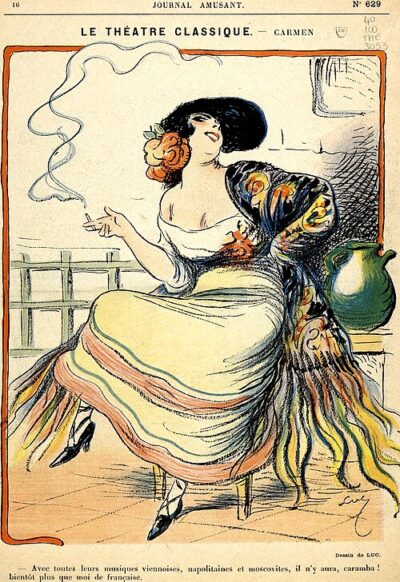
Picture: Lucien Métivet, via Wikimedia Commons · Public domain