Castelnuovo–de Franchis theorem
Castelnuovo–de Franchis theorem is a theorem.
All 3 facts, and where they come from
Facts
3 facts · 0 confirmed by two sources · 0 cited · 3 from one source
Where this comes from
Papalocal keeps its own record. It started from these sources; what each one said is kept here as it was copied, so a change on their side never changes this page by itself. Tap one to read its version.
What Wikidata says · copied November 18, 2026 · revision 2524402894
- What it is
- theorem
- Named after
- Guido Castelnuovo; Michele De Franchis
- Wikipedias with a page
- 2
Wikidata item Q5049717 (wikidata.org/wiki/Q5049717), public domain (CC0). Copied 2026-11-18.
What Wikipedia says · copied November 18, 2026 · revision 1170946923
In mathematics, the Castelnuovo–de Franchis theorem is a classical result on complex algebraic surfaces. Let X be such a surface, projective and non-singular, and let
ω1 and ω2
be two differentials of the first kind on X which are linearly independent but with wedge product 0. Then this data can be represented as a pullback of an algebraic curve: there is a non-singular algebraic curve C, a morphismφ: X → C,
and differentials of the first kind ω′1 and ω′2 on C such thatφ*(ω′1) = ω1 and φ*(ω′2) = ω2.
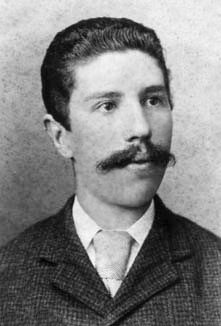
This result is due to Guido Castelnuovo and Michele de Franchis (1875–1946).
The converse, that two such pullbacks would have wedge 0, is immediate.
From the Wikipedia article “Castelnuovo–de Franchis theorem” (en.wikipedia.org/wiki/Castelnuovo–de_Franchis_theorem), by its contributors, under CC BY-SA 4.0 (creativecommons.org/licenses/by-sa/4.0/). Copied 2026-11-18; not changed.
Confirmed Two sources agree. Cited One source, and it names where it got it. One source One source, without a reference of its own. Sources disagree The sources disagree. We show the best-supported value and keep theirs below.