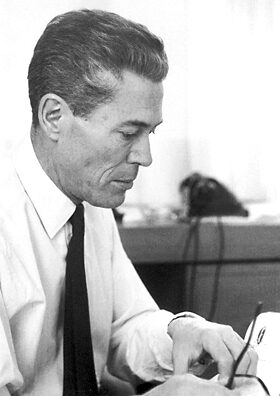
Chance and Necessity
Chance and Necessity is an essay by Jacques Monod. It came out in 1970.
- Published
- 1970
- Written by
- Jacques Monod
- Genre
- essay
All 5 facts, and where they come from
Facts
5 facts · 0 confirmed by two sources · 0 cited · 5 from one source
Where this comes from
Papalocal keeps its own record. It started from these sources; what each one said is kept here as it was copied, so a change on their side never changes this page by itself. Tap one to read its version.
What Wikidata says · copied November 17, 2026 · revision 2549976671
- Described as
- essay by Jacques Monod
- What it is
- literary work
- Written by
- Jacques Monod
- Genre
- essay · 1 reference
- Published
- 1970
- Language
- French
- Wikipedias with a page
- 13
Wikidata item Q228169 (wikidata.org/wiki/Q228169), public domain (CC0). Copied 2026-11-17.
What Wikipedia says · copied November 17, 2026 · revision 1384288132
Chance and Necessity: Essay on the Natural Philosophy of Modern Biology (French: Le Hasard et la Nécessité: Essai sur la philosophie naturelle de la biologie moderne) is a 1970 book by Nobel Prize winner Jacques Monod. Aimed at a general audience, the book describes the basic characteristics of life, reviews findings of modern biochemistry and molecular biology, and argues that life arose by blind chance guided by natural selection, could not have been predicted, and does not have a higher purpose. The author concludes that traditional philosophical or religious systems of value, explanation and meaning are untenable, and advocates for an "ethic of knowledge": committing to objectivity in the pursuit of knowledge.
According to the introduction, the book's title was inspired by a line attributed to Democritus, "Everything existing in the universe is the fruit of chance and necessity."
From the Wikipedia article “Chance and Necessity” (en.wikipedia.org/wiki/Chance_and_Necessity), by its contributors, under CC BY-SA 4.0 (creativecommons.org/licenses/by-sa/4.0/). Copied 2026-11-17; not changed.
Confirmed Two sources agree. Cited One source, and it names where it got it. One source One source, without a reference of its own. Sources disagree The sources disagree. We show the best-supported value and keep theirs below.