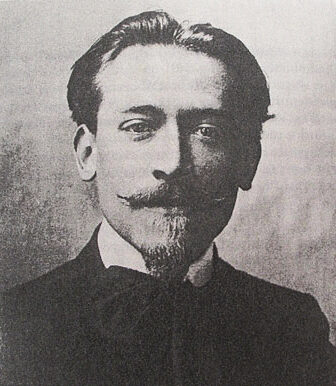
Chants d'Auvergne
Chants d'Auvergne is a musical work/composition.
- Genre
- mélodie
- Country of origin
- France
All 5 facts, and where they come from
Facts
5 facts · 0 confirmed by two sources · 0 cited · 5 from one source
Where this comes from
Papalocal keeps its own record. It started from these sources; what each one said is kept here as it was copied, so a change on their side never changes this page by itself. Tap one to read its version.
What Wikidata says · copied November 18, 2026 · revision 2569932211
- Described as
- song
- What it is
- musical work/composition; lyrico-musical work
- Music by
- Joseph Canteloube
- Genre
- mélodie
- Country of origin
- France
- Wikipedias with a page
- 4
Wikidata item Q2956423 (wikidata.org/wiki/Q2956423), public domain (CC0). Copied 2026-11-18.
What Wikipedia says · copied November 18, 2026 · revision 1371333277
Chants d'Auvergne (French pronunciation: [ʃɑ̃ dovɛːʁɲ]; English: Songs from the Auvergne), by Joseph Canteloube, is a collection of folk songs from the Auvergne region of France, arranged for soprano voice and orchestra or piano between 1923 and 1930. The 27 songs, collected in five series, are in the local language, Auvergnat, a dialect of Occitan. The best-known of the songs is the "Baïlèro", which has been frequently recorded and performed, sometimes with slight variations of Canteloube's arrangement, such as for choir or instrumental performance, rather than the original soprano solo.
The first recording, of eleven of the songs, was by Madeleine Grey in 1930, with an ensemble conducted by Élie Cohen. The songs are part of the standard repertoire and have been recorded by many singers.
The melodic elements of two of these songs, "Baïlèro" and "Obal, din lou limouzi (La-bas dans le limousin)", were incorporated into William Walton's soundtrack for Laurence Olivier's 1944 film of Shakespeare's Henry V. "Baïlèro" (sometimes known as "Le Baylere" or "The Shepherd's Song") has also been re-arranged for full chorus by Goff Richards for the National Youth Choir of Great Britain. It was recorded by Tony Osborne Sound for use in a Dubonnet advertisement in 1972.
From the Wikipedia article “Chants d'Auvergne” (en.wikipedia.org/wiki/Chants_d'Auvergne), by its contributors, under CC BY-SA 4.0 (creativecommons.org/licenses/by-sa/4.0/). Copied 2026-11-18; not changed.
Confirmed Two sources agree. Cited One source, and it names where it got it. One source One source, without a reference of its own. Sources disagree The sources disagree. We show the best-supported value and keep theirs below.