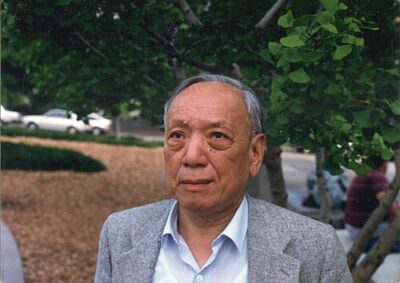
Chern–Simons theory
Chern–Simons theory is a three-dimensional topological quantum field theory whose action is the Chern–Simons form.
All 2 facts, and where they come from
Facts
2 facts · 0 confirmed by two sources · 0 cited · 2 from one source
Where this comes from
Papalocal keeps its own record. It started from these sources; what each one said is kept here as it was copied, so a change on their side never changes this page by itself. Tap one to read its version.
What Wikidata says · copied November 17, 2026 · revision 2516930408
- Described as
- three-dimensional topological quantum field theory whose action is the Chern–Simons form
- Other names
- Chern-Simons theory, CS theory
- What it is
- topological quantum field theory
- Named after
- Chern–Simons form
- Wikipedias with a page
- 12
Wikidata item Q1528019 (wikidata.org/wiki/Q1528019), public domain (CC0). Copied 2026-11-17.
What Wikipedia says · copied November 17, 2026 · revision 1350465955
The Chern–Simons theory is a 3-dimensional topological quantum field theory of Schwarz type. It was discovered first by mathematical physicist Albert Schwarz. It is named after mathematicians Shiing-Shen Chern and James Harris Simons, who introduced the Chern–Simons 3-form. In the Chern–Simons theory, the action is proportional to the integral of the Chern–Simons 3-form.
In condensed-matter physics, Chern–Simons theory describes composite fermions and the topological order in fractional quantum Hall effect states. In mathematics, it has been used to calculate knot invariants and three-manifold invariants such as the Jones polynomial.
Particularly, Chern–Simons theory is specified by a choice of simple Lie group G known as the gauge group of the theory and also a number referred to as the level of the theory, which is a constant that multiplies the action. The action is gauge dependent, however the partition function of the quantum theory is well-defined when the level is an integer and the gauge field strength vanishes on all boundaries of the 3-dimensional spacetime.
It is also the central mathematical object in theoretical models for topological quantum computers (TQC). Specifically, an SU(2) Chern–Simons theory describes the simplest non-abelian anyonic model of a TQC, the Yang–Lee–Fibonacci model.
The dynamics of Chern–Simons theory on the 2-dimensional boundary of a 3-manifold is closely related to fusion rules and conformal blocks in conformal field theory, and in particular WZW theory.
From the Wikipedia article “Chern–Simons theory” (en.wikipedia.org/wiki/Chern–Simons_theory), by its contributors, under CC BY-SA 4.0 (creativecommons.org/licenses/by-sa/4.0/). Copied 2026-11-17; not changed.
Confirmed Two sources agree. Cited One source, and it names where it got it. One source One source, without a reference of its own. Sources disagree The sources disagree. We show the best-supported value and keep theirs below.