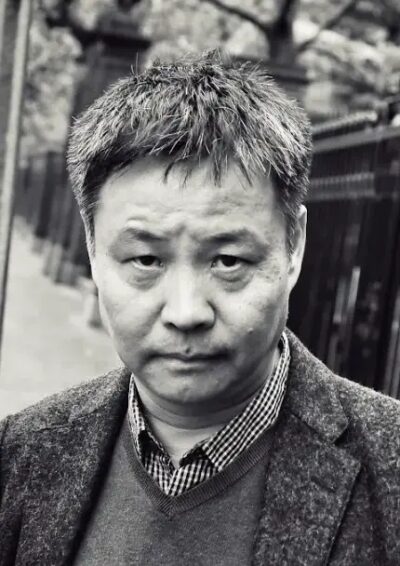
Chronicle of a Blood Merchant
Chronicle of a Blood Merchant is a 1995 novel by Chinese writer Yu Hua.
- Published
- 1995
- Written by
- Yu Hua
- Country of origin
- People's Republic of China
All 5 facts, and where they come from
Facts
5 facts · 0 confirmed by two sources · 0 cited · 5 from one source
Where this comes from
Papalocal keeps its own record. It started from these sources; what each one said is kept here as it was copied, so a change on their side never changes this page by itself. Tap one to read its version.
What Wikidata says · copied November 17, 2026 · revision 1880106747
- Described as
- 1995 novel by Chinese writer Yu Hua
- What it is
- literary work
- Written by
- Yu Hua
- Published
- 1995
- Language
- Chinese
- Country of origin
- People's Republic of China
- Wikipedias with a page
- 5
Wikidata item Q5114035 (wikidata.org/wiki/Q5114035), public domain (CC0). Copied 2026-11-17.
What Wikipedia says · copied November 17, 2026 · revision 1384323449
Chronicle of a Blood Merchant (simplified Chinese: 许三观卖血记; traditional Chinese: 許三觀賣血記; pinyin: Xǔ Sānguān Mài Xuě Jì) is a 1995 novel by Chinese writer Yu Hua. It is his third novel after Cries in the Drizzle and To Live. It is the story of a silk factory worker, Xu Sanguan, who sells his blood over the years, in most cases in an attempt to improve the lives of himself and his family members, and overcome family difficulties. The story is set in the late 1940s until the 1980s, from the early years of the People's Republic of China until after the Cultural Revolution.
The story begins with Xu Sanguan's visit to his grandpa, when he first learns about selling blood. His first time selling blood is to prove his body is in good health. After discovering that selling blood can quickly get him a lot of cash, he begins to sell blood constantly when he and his family struggle with life difficulties. By the end of the story, Xu Sanguan's family no longer lacks cash, and he thus no longer needs to sell blood to support his family.
The space of "folk" in the novel is neatly built by the extensive use of repetitions and dialogues, which highlights the nature of Chinese peasants and the social scenario of the era. The novel holds elements of black humor—a characteristic that Yu Hua typically applies in his other novels such as To Live. Yu Hua's style of using humor to highlight contemporary socio-political issues in China has been compared to the modern visual art movement of cynical realism.
The book received rave reviews from critics and an English translation by Andrew F. Jones was released in 2003. The title has also been translated as The Chronicle of Xu Sanguan's Blood Selling, Xu Sanguan's Records of Selling Blood and The Tale of Xu Sanguan Selling Blood. The translator stated that this novel is "a work of literary imagination and social critique."
From the Wikipedia article “Chronicle of a Blood Merchant” (en.wikipedia.org/wiki/Chronicle_of_a_Blood_Merchant), by its contributors, under CC BY-SA 4.0 (creativecommons.org/licenses/by-sa/4.0/). Copied 2026-11-17; not changed.
Confirmed Two sources agree. Cited One source, and it names where it got it. One source One source, without a reference of its own. Sources disagree The sources disagree. We show the best-supported value and keep theirs below.