Chronicon
Chronicon is a Greek chronicle written by Eusebius, published in 311 (1st edition) and 325 (2nd edition). It was written by Eusebius of Caesarea.
- Came out
- 311
- Written by
- Eusebius of Caesarea
All 4 facts, and where they come from
Facts
4 facts · 0 confirmed by two sources · 3 cited · 0 from one source · 1 where the sources disagree
What’s different
- Came out: we show 311 (Sources disagree). Wikidata also lists 325
Where this comes from
Papalocal keeps its own record. It started from these sources; what each one said is kept here as it was copied, so a change on their side never changes this page by itself. Tap one to read its version.
What Wikidata says · copied November 17, 2026 · revision 2567231340
- Described as
- Greek chronicle written by Eusebius, published in 311 (1st edition) and 325 (2nd edition)
- Other names
- Chronicle
- What it is
- written work · 1 reference
- Written by
- Eusebius of Caesarea · 1 reference
- Language
- Ancient Greek · 1 reference
- Came out
- 311 · 1 reference; 325 · 1 reference
- Wikipedias with a page
- 13
Wikidata item Q3675944 (wikidata.org/wiki/Q3675944), public domain (CC0). Copied 2026-11-17.
What Wikipedia says · copied November 17, 2026 · revision 1359523213
The Chronicon or Chronicle (Greek: Παντοδαπὴ ἱστορία Pantodape historia, "Universal history") was a work in two books by Eusebius of Caesarea. It seems to have been compiled in the early 4th century. It contained a world chronicle from Abraham until the vicennalia of Constantine I in A.D. 325. Book 1 contained sets of extracts from earlier writers; book 2 contained a technically innovative list of dates and events in tabular format.
The original Greek text is lost, although substantial quotations exist in later chronographers. Both books are mostly preserved in an Armenian translation. Book 2 is entirely preserved in the Latin translation by Jerome. Portions also exist in quotation in later Syriac writers such as the fragments by James of Edessa and, following him, Michael the Syrian.
The Chronicle as preserved extends to the year 325, and was written before the "Church History". It exerted considerable influence on later chronicles. Jacob of Edessa's own Chronicon begins where the Chronicon of Eusebius ended, and extends its coverage across the nearly four centuries that separated the two figures.
From the Wikipedia article “Chronicon (Eusebius)” (en.wikipedia.org/wiki/Chronicon_(Eusebius)), by its contributors, under CC BY-SA 4.0 (creativecommons.org/licenses/by-sa/4.0/). Copied 2026-11-17; not changed.
Confirmed Two sources agree. Cited One source, and it names where it got it. One source One source, without a reference of its own. Sources disagree The sources disagree. We show the best-supported value and keep theirs below.
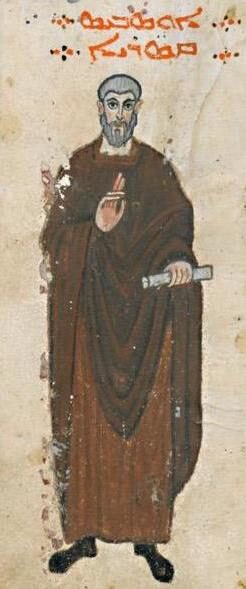
Picture: Wikimedia Commons: Armenian translation of Eusebius Chronicon.jpg · See Commons file page