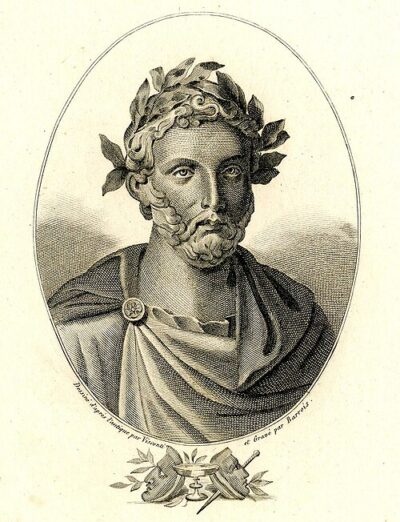
Cistellaria
Cistellaria is an Ancient Roman play by Plautus.
- Written by
- Plautus
- Genre
- fabula palliata
All 4 facts, and where they come from
Facts
4 facts · 0 confirmed by two sources · 2 cited · 2 from one source
Where this comes from
Papalocal keeps its own record. It started from these sources; what each one said is kept here as it was copied, so a change on their side never changes this page by itself. Tap one to read its version.
What Wikidata says · copied November 17, 2026 · revision 2489819056
- Described as
- Ancient Roman play by Plautus
- Other names
- Pl. Cist.
- What it is
- literary work
- Written by
- Plautus · 1 reference
- Genre
- fabula palliata
- Language
- Latin · 1 reference
- Wikipedias with a page
- 11
Wikidata item Q617142 (wikidata.org/wiki/Q617142), public domain (CC0). Copied 2026-11-17.
What Wikipedia says · copied November 17, 2026 · revision 1380797861
Cistellaria, translated as The Casket, is a comedic Latin play of the late 3rd century BC by the early Roman playwright Titus Maccius Plautus. The story, set in the Greek town of Sicyon, concerns a girl called Selenium who was exposed as a baby and brought up by a courtesan called Melaenis. By a happy chance it is discovered that her birth mother, married to a senator Demipho, lives next door, enabling her to marry the young man Alcesimarchus who loves her.
The play was adapted from a lost comedy by Menander called Synaristosai ("The Women Who Lunched Together"). The Cistellaria appears to be one of Plautus's earliest plays. In line 202, the hope is expressed that the war with Carthage will soon end with victory for the Romans (the Second Punic War in fact ended in 202 BC). The same passage mentions "your allies old and new", which may be a reference to the treaty of alliance made with the Aetolian League in 209.
From the Wikipedia article “Cistellaria” (en.wikipedia.org/wiki/Cistellaria), by its contributors, under CC BY-SA 4.0 (creativecommons.org/licenses/by-sa/4.0/). Copied 2026-11-17; not changed.
Confirmed Two sources agree. Cited One source, and it names where it got it. One source One source, without a reference of its own. Sources disagree The sources disagree. We show the best-supported value and keep theirs below.