Clausius–Clapeyron relation
Clausius–Clapeyron relation is a relation between vapour pressure and temperature.
All 3 facts, and where they come from
Facts
3 facts · 0 confirmed by two sources · 0 cited · 3 from one source
Where this comes from
Papalocal keeps its own record. It started from these sources; what each one said is kept here as it was copied, so a change on their side never changes this page by itself. Tap one to read its version.
What Wikidata says · copied November 17, 2026 · revision 2549110822
- Described as
- relation between vapour pressure and temperature
- Other names
- Clausius-Clapeyron equation, Clausius–Clapeyron equation
- What it is
- comparison
- Named after
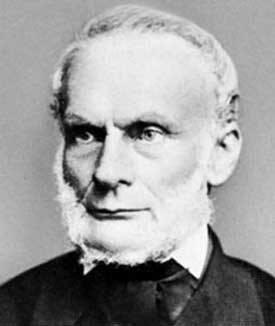
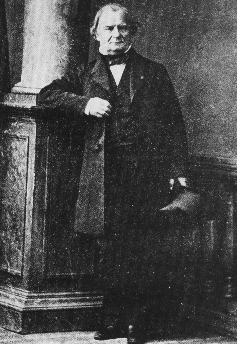
- Rudolf Clausius; Benoît Paul Émile Clapeyron
- Wikipedias with a page
- 33
Wikidata item Q745416 (wikidata.org/wiki/Q745416), public domain (CC0). Copied 2026-11-17.
What Wikipedia says · copied November 17, 2026 · revision 1384127503
The Clausius–Clapeyron relation, in chemical thermodynamics, specifies the temperature dependence of pressure, most importantly vapor pressure, at a discontinuous phase transition between two phases of a single constituent. It is named after Rudolf Clausius and Benoît Paul Émile Clapeyron. However, this relation was in fact originally derived by Sadi Carnot in his Reflections on the Motive Power of Fire, which was published in 1824 but largely ignored until it was rediscovered by Clausius, Clapeyron, and Lord Kelvin decades later. Kelvin said of Carnot's argument that "nothing in the whole range of Natural Philosophy is more remarkable than the establishment of general laws by such a process of reasoning."
Kelvin and his brother James Thomson confirmed the relation experimentally in 1849–50, and it was historically important as a very early successful application of theoretical thermodynamics. Its relevance to meteorology and climatology is the increase of the water-holding capacity of the atmosphere by about 7% for every 1 °C (1.8 °F) rise in temperature.
From the Wikipedia article “Clausius–Clapeyron relation” (en.wikipedia.org/wiki/Clausius–Clapeyron_relation), by its contributors, under CC BY-SA 4.0 (creativecommons.org/licenses/by-sa/4.0/). Copied 2026-11-17; not changed.
Confirmed Two sources agree. Cited One source, and it names where it got it. One source One source, without a reference of its own. Sources disagree The sources disagree. We show the best-supported value and keep theirs below.