Clausius–Duhem inequality
Clausius–Duhem inequality is a thermodynamic law expression.
All 3 facts, and where they come from
Facts
3 facts · 0 confirmed by two sources · 0 cited · 3 from one source
Where this comes from
Papalocal keeps its own record. It started from these sources; what each one said is kept here as it was copied, so a change on their side never changes this page by itself. Tap one to read its version.
What Wikidata says · copied November 17, 2026 · revision 2570795340
- Described as
- thermodynamic law expression
- What it is
- scientific theory
- Named after
- Rudolf Clausius; Pierre Duhem
- Wikipedias with a page
- 7
Wikidata item Q5129547 (wikidata.org/wiki/Q5129547), public domain (CC0). Copied 2026-11-17.
What Wikipedia says · copied November 17, 2026 · revision 1182390552
The Clausius–Duhem inequality is a way of expressing the second law of thermodynamics that is used in continuum mechanics. This inequality is particularly useful in determining whether the constitutive relation of a material is thermodynamically allowable.
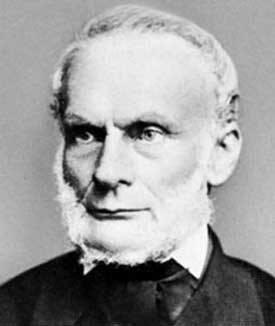
This inequality is a statement concerning the irreversibility of natural processes, especially when energy dissipation is involved. It was named after the German physicist Rudolf Clausius and French physicist Pierre Duhem.
From the Wikipedia article “Clausius–Duhem inequality” (en.wikipedia.org/wiki/Clausius–Duhem_inequality), by its contributors, under CC BY-SA 4.0 (creativecommons.org/licenses/by-sa/4.0/). Copied 2026-11-17; not changed.
Confirmed Two sources agree. Cited One source, and it names where it got it. One source One source, without a reference of its own. Sources disagree The sources disagree. We show the best-supported value and keep theirs below.