Codex Grandior
Codex Grandior is a large single-volume copy of the Bible in an Old Latin translation.
- Came out
- 6th century
- Genre
- biblical literature
All 6 facts, and where they come from
Facts
6 facts · 0 confirmed by two sources · 0 cited · 6 from one source
Where this comes from
Papalocal keeps its own record. It started from these sources; what each one said is kept here as it was copied, so a change on their side never changes this page by itself. Tap one to read its version.
What Wikidata says · copied November 17, 2026 · revision 2512242091
- Described as
- large single-volume copy of the Bible in an Old Latin translation
- What it is
- manuscript; literary work; translated work
- Genre
- biblical literature
- Language
- Latin
- Came out
- 6th century
- Wikipedias with a page
- 5
Wikidata item Q5140213 (wikidata.org/wiki/Q5140213), public domain (CC0). Copied 2026-11-17.
What Wikipedia says · copied November 17, 2026 · revision 1360619896
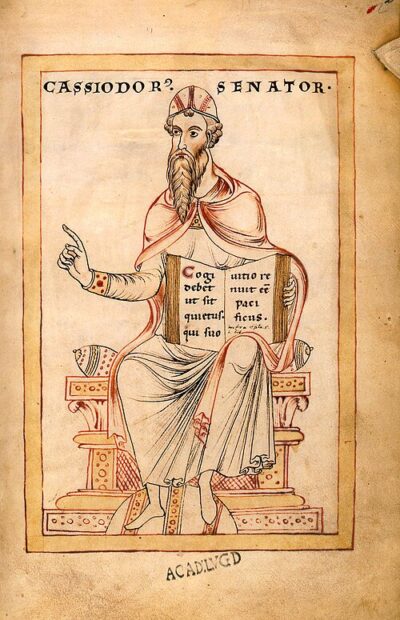
The Codex Grandior ("Larger Codex") was a large single-volume copy of the Bible in an Old Latin translation that was made for or by Cassiodorus in the early 500s. It was one of a number of works held at his monastic foundation Vivarium, near Squillace, Italy.
This codex was probably acquired in Italy by Benedict Biscop or Ceolfrith in 678 for the library of the new monastery at Monkwearmouth–Jarrow Abbey in Northumbria, where Bede eventually realized it was the Codex Grandior, due the presence of certain illustrations. It seems that a pandect (a single codex with all the Biblical books), was regarded as a novelty by the monks, but Coelfrith as abbot and founder of several monasteries wanted a pandect in each in a public area accessible by any of the monks. The book no longer exists, but it is believed to have been the model used by the scribes at Jarrow to create the enormous Codex Amiatinus, the earliest surviving manuscript of the complete Latin Vulgate and two other pandects.
From the Wikipedia article “Codex Grandior” (en.wikipedia.org/wiki/Codex_Grandior), by its contributors, under CC BY-SA 4.0 (creativecommons.org/licenses/by-sa/4.0/). Copied 2026-11-17; not changed.
Confirmed Two sources agree. Cited One source, and it names where it got it. One source One source, without a reference of its own. Sources disagree The sources disagree. We show the best-supported value and keep theirs below.