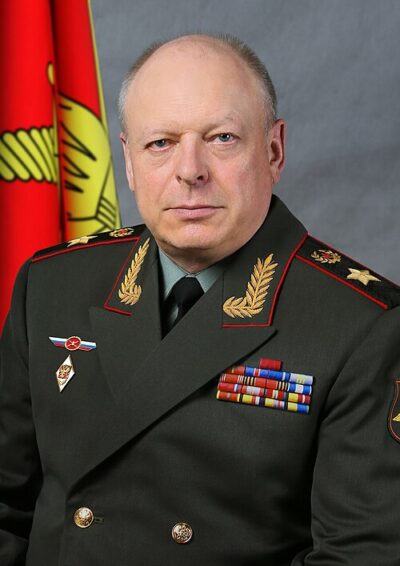
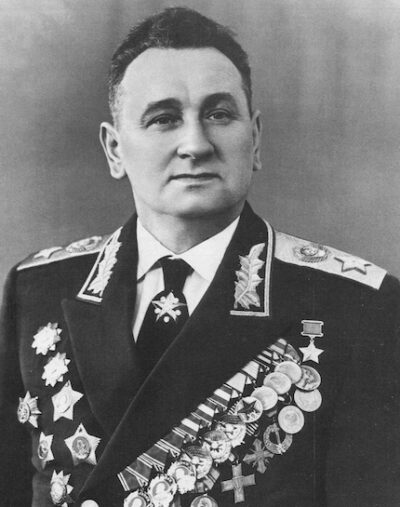
Commander-in-Chief of the Russian Ground Forces
Commander-in-Chief of the Russian Ground Forces is a Russian military position. It was created in 1992.
- Created
- June 10, 1992
All 3 facts, and where they come from
Facts
3 facts · 0 confirmed by two sources · 0 cited · 2 from one source · 1 where the sources disagree
What’s different
- Created: we show June 10, 1992 (Sources disagree). Wikidata also lists August 9, 1812
Where this comes from
Papalocal keeps its own record. It started from these sources; what each one said is kept here as it was copied, so a change on their side never changes this page by itself. Tap one to read its version.
What Wikidata says · copied November 17, 2026 · revision 2474929633
- Described as
- Russian military position
- What it is
- military position
- Created
- June 10, 1992 · 1 reference; August 9, 1812
- Official website
- http://eng.mil.ru/en/management/combatant_arms/more.htm?id=10336066@SD_Employee · 1 reference
- Wikipedias with a page
- 7
Wikidata item Q4139172 (wikidata.org/wiki/Q4139172), public domain (CC0). Copied 2026-11-17.
What Wikipedia says · copied November 17, 2026 · revision 1373660174
The Commander-in-Chief of the Russian Ground Forces (Russian: Главнокомандующий Сухопутными войсками России) is the chief commanding authority of the Russian Ground Forces. He is appointed by the President of Russia. The position dates to the period of the Russian Empire. The current Commander-in-Chief of the Russian Ground Forces is Colonel General Andrey Mordvichev, in office since 15 May 2025.
From 1998 to 2001 the position was briefly called the Chief of the Main Directorate of the Ground Forces.
From the Wikipedia article “Commander-in-Chief of the Russian Ground Forces” (en.wikipedia.org/wiki/Commander-in-Chief_of_the_Russian_Ground_Forces), by its contributors, under CC BY-SA 4.0 (creativecommons.org/licenses/by-sa/4.0/). Copied 2026-11-17; not changed.
Confirmed Two sources agree. Cited One source, and it names where it got it. One source One source, without a reference of its own. Sources disagree The sources disagree. We show the best-supported value and keep theirs below.