Communist Party of Nepal (Unified Marxist–Leninist)
Communist Party of Nepal (Unified Marxist–Leninist) is a political party in Nepal. It was founded in 1991. Its headquarters are in Kathmandu. It stands for communism, social democracy and Marxism–Leninism.
- Country
- Nepal
- Founded
- January 6, 1991
- Ideology
- communism
All 10 facts, and where they come from
Facts
10 facts · 0 confirmed by two sources · 3 cited · 7 from one source
Where this comes from
Papalocal keeps its own record. It started from these sources; what each one said is kept here as it was copied, so a change on their side never changes this page by itself. Tap one to read its version.
What Wikidata says · copied November 17, 2026 · revision 2499600667
- Described as
- political party in Nepal
- Other names
- CPN–UML, CPN (UML), CPN-UML
- What it is
- communist party
- Founded
- January 6, 1991
- Headquarters
- Kathmandu
- Country
- Nepal
- Chair
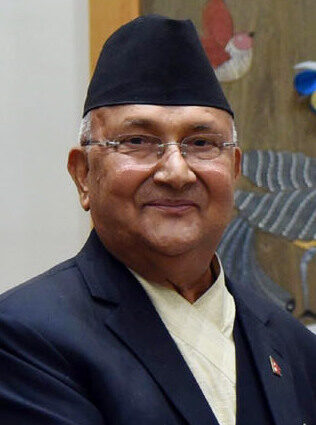
- K. P. Sharma Oli (2014–)
- Ideology
- communism · 1 reference; Marxism–Leninism · 1 reference; People's Multiparty Democracy; social democracy · 1 reference
- Official website
- http://www.cpnuml.org
- Wikipedias with a page
- 33
Wikidata item Q426963 (wikidata.org/wiki/Q426963), public domain (CC0). Copied 2026-11-17.
What Wikipedia says · copied November 17, 2026 · revision 1383241083
The Communist Party of Nepal (Unified Marxist–Leninist) (CPN (UML)) is a Marxist-Leninist party political party in Nepal. The party emerged as one of the major parties in Nepal after the end of the Panchayat era.
K. P. Sharma Oli has been serving as party chairman since the party's ninth general convention in 2014. The party currently holds 79 seats in the House of Representatives, having won 26.95% of the party list votes in the 2022 general election and is the second largest parliamentary group. There have been four prime ministers from the party while the party has led the government six times with the most recent Oli government which was deposed by 2025 Nepalese Gen Z protests.
CPN (UML) was the main opposition in 1991 after the first election following the restoration of multi-party democracy. The party led a minority government under Man Mohan Adhikari following the 1994 election. The party joined a coalition government with the Communist Party of Nepal (Maoist Centre) in 2008 in the first elections after the end of the monarchy in Nepal and led two governments under Madhav Kumar Nepal and Jhala Nath Khanal during the term of the 1st Nepalese Constituent Assembly. The party also led the first government after the promulgation of the new constitution with K. P. Sharma Oli serving as prime minister. Oli again served as prime minister following the 2017 election.
The party was formed in January 1991 after the merger of the Communist Party of Nepal (Marxist) and the Communist Party of Nepal (Marxist–Leninist). The party merged with CPN (Maoist Centre) to form the Nepal Communist Party on 17 May 2018 but the new party was dissolved and CPN (UML) was revived by a Supreme Court decision on 8 March 2021. The party claimed to have 650,000 members as of August 2025, down from 855,000 in December 2021.
In 2025, the party faced a wave of criticism, including from many other Nepali Marxist-Leninist groups, for accusations of engaging in mass nepotism, brutalizing protesters, backsliding democracy, banning social media and becoming the new elite it once overthrew. Its Chairman, K. P. Sharma Oli, resigned and dissolved the cabinet, as per protest demands. Later the parliament was dissolved for a fresh mandate.
From the Wikipedia article “Communist Party of Nepal (Unified Marxist–Leninist)” (en.wikipedia.org/wiki/Communist_Party_of_Nepal_(Unified_Marxist–Leninist)), by its contributors, under CC BY-SA 4.0 (creativecommons.org/licenses/by-sa/4.0/). Copied 2026-11-17; not changed.
Confirmed Two sources agree. Cited One source, and it names where it got it. One source One source, without a reference of its own. Sources disagree The sources disagree. We show the best-supported value and keep theirs below.