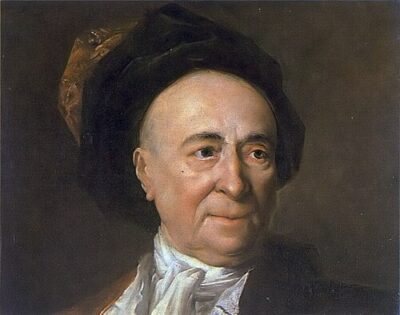
Conversations on the Plurality of Worlds
Conversations on the Plurality of Worlds is a 1686 essay by Bernard Le Bovier de Fontenelle.
- Published
- 1686
- Written by
- Bernard Le Bovier de Fontenelle
- Genre
- essay
- Country of origin
- France
All 6 facts, and where they come from
Facts
6 facts · 0 confirmed by two sources · 0 cited · 6 from one source
Where this comes from
Papalocal keeps its own record. It started from these sources; what each one said is kept here as it was copied, so a change on their side never changes this page by itself. Tap one to read its version.
What Wikidata says · copied November 17, 2026 · revision 2526298633
- Described as
- 1686 essay by Bernard Le Bovier de Fontenelle
- What it is
- written work
- Written by
- Bernard Le Bovier de Fontenelle
- Genre
- essay
- Published
- 1686
- Language
- French
- Country of origin
- France · 1 reference
- Wikipedias with a page
- 12
Wikidata item Q776279 (wikidata.org/wiki/Q776279), public domain (CC0). Copied 2026-11-17.
What Wikipedia says · copied November 17, 2026 · revision 1384799149
Conversations on the Plurality of Worlds (French: Entretiens sur la pluralité des mondes) is a work of astronomical and philosophical popular science in the form of a dialogue, published anonymously in 1686 and attributed to Bernard Le Bovier de Fontenelle. The text presents the astronomical theories of René Descartes and Nicolaus Copernicus through conversations between a narrator and a marquise, divided into six evenings and preceded by a preface and a dedication To Monsieur L***.
The book was intended for educated non-specialist readers, especially from aristocratic and fashionable society. Fontenelle's choice of French rather than scientific Latin helped the work reach a non-specialist audience: Conversations went through many new editions—33 during the author's lifetime—and was translated into more than ten languages.
From the Wikipedia article “Conversations on the Plurality of Worlds” (en.wikipedia.org/wiki/Conversations_on_the_Plurality_of_Worlds), by its contributors, under CC BY-SA 4.0 (creativecommons.org/licenses/by-sa/4.0/). Copied 2026-11-17; not changed.
Confirmed Two sources agree. Cited One source, and it names where it got it. One source One source, without a reference of its own. Sources disagree The sources disagree. We show the best-supported value and keep theirs below.
Picture: Wikimedia Commons: Plurality of Worlds.jpg · See Commons file page