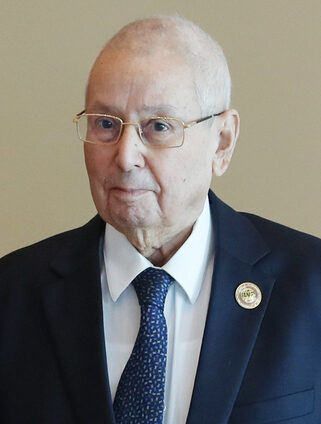
Council of the Nation
The Council of the Nation is an Upper house of Algerian Parliament. It was founded in 1996. Its headquarters are in the Palace of the Council of the Nation.
- Founded
- November 28, 1996
- Headquarters
- Palace of the Council of the Nation
- Country
- Algeria
All 7 facts, and where they come from
Facts
7 facts · 0 confirmed by two sources · 0 cited · 7 from one source
Where this comes from
Papalocal keeps its own record. It started from these sources; what each one said is kept here as it was copied, so a change on their side never changes this page by itself. Tap one to read its version.
What Wikidata says · copied November 17, 2026 · revision 2560614000
- Described as
- Upper house of Algerian Parliament
- What it is
- upper house
- Founded
- November 28, 1996 · 1 reference
- Headquarters
- Palace of the Council of the Nation
- Country
- Algeria
- Chair
- Saleh Qojil (2021–)
- Office of
- Algeria
- Official website
- http://www.majliselouma.dz/ · 1 reference
- Wikipedias with a page
- 19
Wikidata item Q2119509 (wikidata.org/wiki/Q2119509), public domain (CC0). Copied 2026-11-17.
What Wikipedia says · copied November 17, 2026 · revision 1366562048
The Council of the Nation (Arabic: مجلس الأمة, romanized: Majlis al-Ummah) is the upper house of the Algerian Parliament. It is composed of 174 members, 2/3 of which are elected indirectly and 1/3 of which are appointed by the president of Algeria.
Abdelkader Bensalah was elected as President of the Council of the Nation on July 2, 2002, re-elected on January 11, 2007 and January 10, 2008.
Zohra Drif was elected as Vice President of the Council of the Nation on September 10, 2002, re-elected on March 7, 2007 and March 8, 2008.
They were last elected on 9 March 2025.
From the Wikipedia article “Council of the Nation” (en.wikipedia.org/wiki/Council_of_the_Nation), by its contributors, under CC BY-SA 4.0 (creativecommons.org/licenses/by-sa/4.0/). Copied 2026-11-17; not changed.
Confirmed Two sources agree. Cited One source, and it names where it got it. One source One source, without a reference of its own. Sources disagree The sources disagree. We show the best-supported value and keep theirs below.