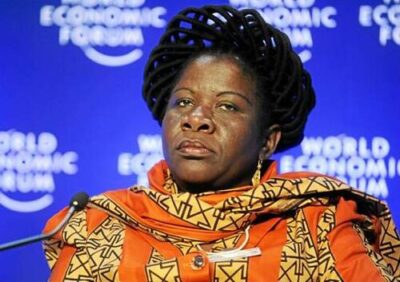
Council of Women World Leaders
The Council of Women World Leaders is a Network of current and former state leaders founded in 1996.
- Founded
- 1996
All 2 facts, and where they come from
Facts
2 facts · 0 confirmed by two sources · 0 cited · 2 from one source
Where this comes from
Papalocal keeps its own record. It started from these sources; what each one said is kept here as it was copied, so a change on their side never changes this page by itself. Tap one to read its version.
What Wikidata says · copied November 17, 2026 · revision 2368015232
- Described as
- Network of current and former state leaders founded in 1996
- What it is
- international organization
- Founded
- 1996
- Wikipedias with a page
- 11
Wikidata item Q5176528 (wikidata.org/wiki/Q5176528), public domain (CC0). Copied 2026-11-17.
What Wikipedia says · copied November 17, 2026 · revision 1383378406
The Council of Women World Leaders is a network organization composed of 96 current and former female presidents and prime ministers.
Established in 1996, its mission is to promote good governance, enhance the experience of democracy, and increase the visibility of women who lead at the highest levels.
It is the only organization in the world dedicated solely to women heads of state and government.
Through its networks, strategic programs, and partnerships, the Council promotes gender equality and increases the visibility of women leading their countries. By drawing on the leadership and expertise of its members, the Council works to support the full participation and representation of women at the highest levels of political leadership — today and for future generations.
The Council's first summit was held April 29–30, 1998, at the John F. Kennedy School of Government at Harvard University.
From the Wikipedia article “Council of Women World Leaders” (en.wikipedia.org/wiki/Council_of_Women_World_Leaders), by its contributors, under CC BY-SA 4.0 (creativecommons.org/licenses/by-sa/4.0/). Copied 2026-11-17; not changed.
Confirmed Two sources agree. Cited One source, and it names where it got it. One source One source, without a reference of its own. Sources disagree The sources disagree. We show the best-supported value and keep theirs below.