count of Boulogne
Count of Boulogne is a historical title in the Kingdom of France.
All 1 facts, and where they come from
Facts
1 facts · 0 confirmed by two sources · 0 cited · 1 from one source
Where this comes from
Papalocal keeps its own record. It started from these sources; what each one said is kept here as it was copied, so a change on their side never changes this page by itself. Tap one to read its version.
What Wikidata says · copied November 17, 2026 · revision 2462845898
- Described as
- historical title in the Kingdom of France
- What it is
- noble title
- Wikipedias with a page
- 7
Wikidata item Q19894615 (wikidata.org/wiki/Q19894615), public domain (CC0). Copied 2026-11-17.
What Wikipedia says · copied November 17, 2026 · revision 1363501185
Count of Boulogne was a historical title in the Kingdom of France. The city of Boulogne-sur-Mer became the centre of the County of Boulogne during the ninth century. Little is known of the early counts, but the first holder of the title is recorded in the 11th century.
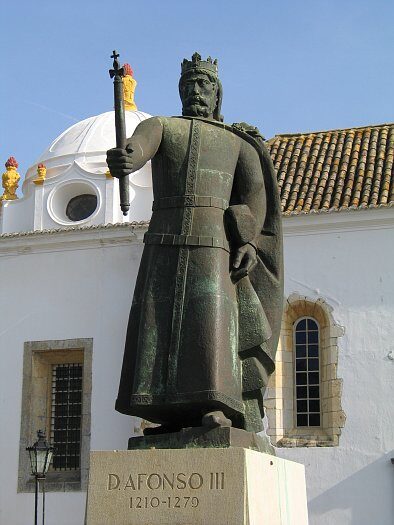
Eustace II of Boulogne accompanied William I of England (the Conqueror) during the Norman Conquest in 1066 and fought on his side at the Battle of Hastings. His son, Eustace III, was a major participant in the First Crusade with his younger brothers: Geoffrey and Baldwin (who later became King of Jerusalem). After Baldwin's death the throne was offered to Eustace, who was reluctant and declined; the throne was then offered to Geoffrey. Afonso (also King of Portugal) from Dammartin became Count of Boulogne from 1235 to 1253.
Count Renaud of Boulogne obtained the title by abducting and marrying Countess Ida in 1190 and later gained title to Dammartin and Aumale. An early friend of King Philip II Augustus, he turned against the king by joining the forces of the Holy Roman Empire at the Battle of Bouvines in 1214 where he was defeated, captured, imprisoned and subsequently committed suicide.
Boulogne passed under Capetian control in 1223 when Philip II's son Philip Hurepel became count jure uxoris upon his marriage to Matilda II. Hurepel revolted against Blanche of Castile when Louis VIII of France died in 1226. When Philip Hurepel died in 1235, Matilda continued to reign until 1238 when she was married to Alphonse, second son of King Alfonso II of Portugal, and younger brother of King Sancho II of Portugal. Having succeeded his brother as Afonso III of Portugal in 1248, he renounced his title of Count of Boulogne and divorced Matilda in 1253 due to her barrenness in favour of Beatrice of Castile. After Matilda's death, the county was granted to Adelaide of Brabant, wife of William III of Auvergne.
Boulogne was attacked and besieged a number of times during the Hundred Years' War and repeatedly passed between English and French rule. In 1477, the county was directly incorporated into the French crown lands and Bertrand VI of La Tour was granted the County of Lauragais by King Louis XI instead. The county remained part of the royal domain from then on, except for a brief period where its main city Boulogne-sur-Mer was controlled by the English under Henry VIII.
From the Wikipedia article “Count of Boulogne” (en.wikipedia.org/wiki/Count_of_Boulogne), by its contributors, under CC BY-SA 4.0 (creativecommons.org/licenses/by-sa/4.0/). Copied 2026-11-17; not changed.
Confirmed Two sources agree. Cited One source, and it names where it got it. One source One source, without a reference of its own. Sources disagree The sources disagree. We show the best-supported value and keep theirs below.