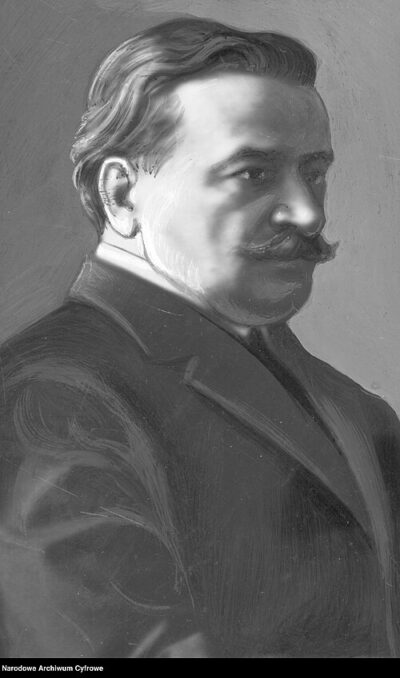
Cracovian
Cracovian is a clerical convenience for solving systems of linear equations by hand.
All 3 facts, and where they come from
Facts
3 facts · 0 confirmed by two sources · 0 cited · 3 from one source
Where this comes from
Papalocal keeps its own record. It started from these sources; what each one said is kept here as it was copied, so a change on their side never changes this page by itself. Tap one to read its version.
What Wikidata says · copied November 19, 2026 · revision 2570288198
- Described as
- clerical convenience for solving systems of linear equations by hand
- What it is
- mathematical concept; algorithm
- Named after
- Tadeusz Banachiewicz
- Wikipedias with a page
- 4
Wikidata item Q5180433 (wikidata.org/wiki/Q5180433), public domain (CC0). Copied 2026-11-19.
What Wikipedia says · copied November 19, 2026 · revision 1340522544
In astronomical and geodetic calculations, Cracovians are a clerical convenience introduced in 1925 by Tadeusz Banachiewicz for solving systems of linear equations by hand. Such systems can be written as Ax = b in matrix notation where x and b are column vectors and the evaluation of b requires the multiplication of the rows of A by the vector x.
Cracovians introduced the idea of using the transpose of A, AT, and multiplying the columns of AT by the column x. This amounts to the definition of a new type of matrix multiplication denoted here by '∧'. Thus x ∧ AT = b = Ax. The Cracovian product of two matrices, say A and B, is defined by A ∧ B = BTA, where BT and A are assumed compatible for the common (Cayley) type of matrix multiplication.
Since (AB)T = BTAT, the products (A ∧ B) ∧ C and A ∧ (B ∧ C) will generally be different; thus, Cracovian multiplication is non-associative. Cracovians are an example of a quasigroup.
Cracovians adopted a column-row convention for designating individual elements as opposed to the standard row-column convention of matrix analysis. This made manual multiplication easier, as one needed to follow two parallel columns (instead of a vertical column and a horizontal row in the matrix notation.) It also sped up computer calculations, because both factors' elements were used in a similar order, which was more compatible with the sequential access memory in computers of those times — mostly magnetic tape memory and drum memory. Use of Cracovians in astronomy faded as computers with bigger random access memory came into general use. Any modern reference to them is in connection with their non-associative multiplication.
Named for recognition of the City of Kraków.
From the Wikipedia article “Cracovian” (en.wikipedia.org/wiki/Cracovian), by its contributors, under CC BY-SA 4.0 (creativecommons.org/licenses/by-sa/4.0/). Copied 2026-11-19; not changed.
Confirmed Two sources agree. Cited One source, and it names where it got it. One source One source, without a reference of its own. Sources disagree The sources disagree. We show the best-supported value and keep theirs below.