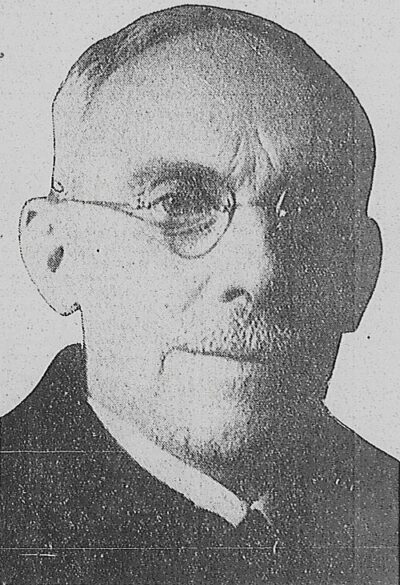
Croatian Peasant Party
The Croatian Peasant Party is a political party. It was founded in 1904 by Stjepan Radić. Its headquarters are in Zagreb. It stands for Christian democracy, social conservatism and agrarianism.
- Country
- Croatia
- Founded
- December 22, 1904
- Ideology
- Christian democracy
All 10 facts, and where they come from
Facts
10 facts · 0 confirmed by two sources · 0 cited · 10 from one source
Where this comes from
Papalocal keeps its own record. It started from these sources; what each one said is kept here as it was copied, so a change on their side never changes this page by itself. Tap one to read its version.
What Wikidata says · copied November 17, 2026 · revision 2549851575
- Described as
- political party
- Other names
- HSS
- What it is
- political party
- Founded
- December 22, 1904
- Founded by
- Stjepan Radić
- Headquarters
- Zagreb
- Country
- Croatia
- Ideology
- Christian democracy; social conservatism; agrarianism; pro-Europeanism
- Official website
- http://www.hss.hr
- Wikipedias with a page
- 25
Wikidata item Q638194 (wikidata.org/wiki/Q638194), public domain (CC0). Copied 2026-11-17.
What Wikipedia says · copied November 17, 2026 · revision 1382361537
The Croatian Peasant Party (Croatian: Hrvatska seljačka stranka, HSS) is an agrarian political party in Croatia founded on 22 December 1904 by Antun and Stjepan Radić as Croatian Peoples' Peasant Party (HPSS). The Brothers Radić believed that the realization of Croatian statehood was possible within Austria-Hungary, but that it had to be reformed as a monarchy divided into three equal parts – Austria, Hungary, and Croatia. After the creation of Kingdom of Yugoslavia in 1918, the party requested self-determination for the Croatian part of the kingdom. This brought them great public support, which culminated in HPSS winning 50 seats, a majority assigned to Croatia in the 1920 parliamentary election.
In 1920, disgruntled with the position of Croats in the kingdom, the party changed its name into Croatian Republican Peasant Party (HRSS) and started advocating secession from the kingdom and the establishment of a "peaceful peasant Republic of Croatia". In the 1923 and 1925 elections, HRSS doubled the number of votes they received, making them the second largest party in the Parliament of Yugoslavia.
In 1925, faced with constant prosecution by the regime, HRSS was forced to soften its policy and change its name into the Croatian Peasant Party (HSS), recognize the Vidovdan Constitution, and form a coalition with the Serbian People's Radical Party. This resulted in HSS losing its popularity and one-third of its vote share in the 1927 election. After the termination of the coalition agreement with the Radicals, HSS formed the Peasant-Democratic Coalition with Pribičević's Independent Democratic Party. After the assassination of Stjepan Radić in 1928, Vladko Maček became the new president of HSS.
After King Alexander declared a dictatorship in 1929, HSS was banned and its members prosecuted. HSS participated in the 1935 and 1938 elections as a part of the United Opposition coalition, which helped it to regain its influence. In 1939, the Cvetković–Maček Agreement established the HSS-governed Banovina of Croatia. After the establishment of the Independent State of Croatia (NDH), a Nazi-puppet state, in 1941, HSS was banned once again, with half of its members joining either the Ustaše or the Partisans. A part stayed loyal to Maček, who believed that the victory of Allies would bring liberal democracy into Croatia and that HSS would return to power. In May 1945, Maček left the country, while HSS split into two fractions which boycotted the 1945 election because of their opposition to the Communists. Under the Socialist Federal Republic of Yugoslavia (1945–1991), HSS was active abroad.
During the breakup of Yugoslavia, HSS was restored under the leadership of Drago Stipac on 25 May 1991. The party first entered government after the 2000 Croatian elections as part of a liberal coalition (HSS-IDS-HNS-LS-SDA), with Ivica Račan (SDP) serving as Prime Minister and HSS president Zlatko Tomčić as Speaker of the Parliament. HSS lost the 2003 election and joined the opposition. In 2007, HSS formed yet another liberal coalition (HSLS-PGS-ZDS-ZS) and led the Ministries of Tourism and Agriculture in the Cabinet of Ivo Sanader II, and Ministries of Tourism and Regional Development in the Cabinet of Jadranka Kosor. In 2011, the party won only one seat in Parliament and moved to the opposition. In 2015, HSS won one seat as part of the conservative Patriotic Coalition and supported Tihomir Orešković as prime minister. In 2016, HSS won 5 seats as part of the liberal People's Coalition.
From the Wikipedia article “Croatian Peasant Party” (en.wikipedia.org/wiki/Croatian_Peasant_Party), by its contributors, under CC BY-SA 4.0 (creativecommons.org/licenses/by-sa/4.0/). Copied 2026-11-17; not changed.
Confirmed Two sources agree. Cited One source, and it names where it got it. One source One source, without a reference of its own. Sources disagree The sources disagree. We show the best-supported value and keep theirs below.