Cronquist system
Cronquist system is a system of plant classification.
All 1 facts, and where they come from
Facts
1 facts · 0 confirmed by two sources · 0 cited · 1 from one source
Where this comes from
Papalocal keeps its own record. It started from these sources; what each one said is kept here as it was copied, so a change on their side never changes this page by itself. Tap one to read its version.
What Wikidata says · copied November 17, 2026 · revision 2567989473
- Described as
- system of plant classification
- What it is
- plant taxonomy
- Wikipedias with a page
- 44
Wikidata item Q213094 (wikidata.org/wiki/Q213094), public domain (CC0). Copied 2026-11-17.
What Wikipedia says · copied November 17, 2026 · revision 1336316641
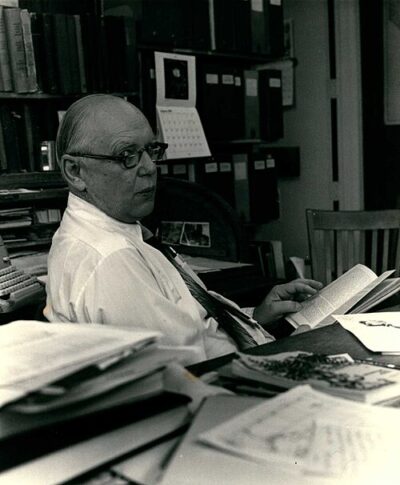
The Cronquist system is a taxonomic classification system of flowering plants. It was developed by Arthur Cronquist in a series of monographs and texts, including The Evolution and Classification of Flowering Plants (1968; 2nd edition, 1988) and An Integrated System of Classification of Flowering Plants (1981) (see Bibliography).
Cronquist's system places flowering plants into two broad classes, Magnoliopsida (dicotyledons) and Liliopsida (monocotyledons). Within these classes, related orders are grouped into subclasses. While the scheme was widely used, in either the original form or in adapted versions, many botanists now use the Angiosperm Phylogeny Group classification for the orders and families of flowering plants, first developed in 1998. The system as laid out in Cronquist's An Integrated System of Classification of Flowering Plants (1981) counts 64 orders and 321 families in class Magnoliopsida and 19 orders and 65 families in class Liliopsida.
From the Wikipedia article “Cronquist system” (en.wikipedia.org/wiki/Cronquist_system), by its contributors, under CC BY-SA 4.0 (creativecommons.org/licenses/by-sa/4.0/). Copied 2026-11-17; not changed.
Confirmed Two sources agree. Cited One source, and it names where it got it. One source One source, without a reference of its own. Sources disagree The sources disagree. We show the best-supported value and keep theirs below.