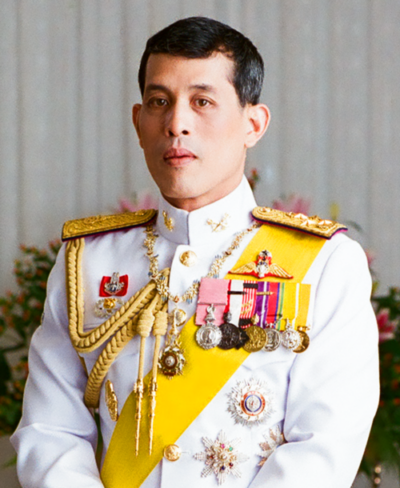
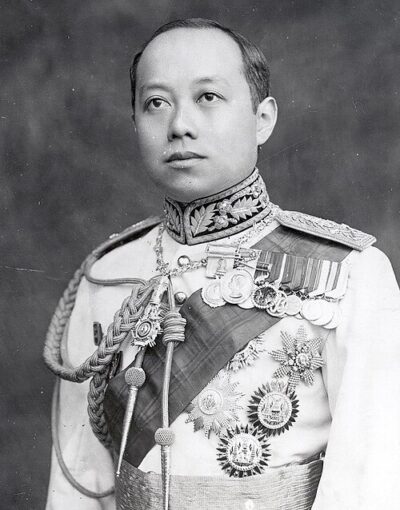
Crown Prince of Thailand
The Crown Prince of Thailand is a Heir apparent to the Thai throne. It was created in 1886.
All 6 facts, and where they come from
Facts
6 facts · 0 confirmed by two sources · 0 cited · 6 from one source
Where this comes from
Papalocal keeps its own record. It started from these sources; what each one said is kept here as it was copied, so a change on their side never changes this page by itself. Tap one to read its version.
What Wikidata says · copied November 17, 2026 · revision 2570435196
- Described as
- Heir apparent to the Thai throne
- What it is
- position; Thai royal ranks and titles; noble title
- Created
- January 14, 1886 · 1 reference
- Country
- Thailand
- Office of
- Thailand
- Wikipedias with a page
- 7
Wikidata item Q5189445 (wikidata.org/wiki/Q5189445), public domain (CC0). Copied 2026-11-17.
What Wikipedia says · copied November 17, 2026 · revision 1384663039
The Crown Prince of Thailand (or Siam; Thai: สยามมกุฎราชกุมาร; RTGS: Sayammakutratchakuman; lit. the royal son of Siam) is a title held by the heir apparent to the Thai throne. It was created by King Chulalongkorn (Rama V) in 1886, for his son Prince Maha Vajirunhis, the king's eldest son by a royal wife Queen Savang Vadhana. Prior to this, the Siamese throne did not have a law or formal system regulating royal succession. In 1688, King Phetracha of Ayutthaya created the title of Front Palace, which by the Rattanakosin period had become the main title granted to the heir presumptive to the throne. However, few Front Palaces succeeded to the throne this way, with the exception of King Phutthaloetla Naphalai (Rama II) in 1809. After the death of Bowon Wichaichan in 1885, the title of Front Palace was abolished and replaced with the title of Crown Prince, who became heir apparent to the throne.
In 1924, King Vajiravudh (Rama VI) promulgated the 1924 Palace Law of Succession to regulate the succession. This law essentially barred females, children of commoner wives or children of foreign wives to the throne. It also re-affirmed agnatic primogeniture, or succession through the male line by seniority. This law also affected the individuals who could become Crown Prince. Since its creation, three Princes have been raised to this title, and two have succeeded to the throne.
The title in Thai, Sayammakutratchakuman, comes from conjugation of the words Sayam (Siam), Sanskrit makut (meaning "crown"), ratcha (from Sanskrit rāj), and kuman (from Sanskrit kumār, meaning "son").
From the Wikipedia article “Crown Prince of Thailand” (en.wikipedia.org/wiki/Crown_Prince_of_Thailand), by its contributors, under CC BY-SA 4.0 (creativecommons.org/licenses/by-sa/4.0/). Copied 2026-11-17; not changed.
Confirmed Two sources agree. Cited One source, and it names where it got it. One source One source, without a reference of its own. Sources disagree The sources disagree. We show the best-supported value and keep theirs below.