Crusade of Romanianism
Crusade of Romanianism is a political party in Romania. It was founded in 1934 by Mihail Stelescu. Its headquarters are in Bucharest. It stands for Third Position.
- Country
- Romania
- Founded
- November 22, 1934
- Ideology
- Third Position
All 7 facts, and where they come from
Facts
7 facts · 0 confirmed by two sources · 0 cited · 7 from one source
Where this comes from
Papalocal keeps its own record. It started from these sources; what each one said is kept here as it was copied, so a change on their side never changes this page by itself. Tap one to read its version.
What Wikidata says · copied November 17, 2026 · revision 2556820328
- Described as
- political party in Romania
- What it is
- political party
- Founded
- November 22, 1934 · 1 reference
- Ended
- June 1937
- Founded by
- Mihail Stelescu
- Headquarters
- Bucharest
- Country
- Romania
- Ideology
- Third Position
- Wikipedias with a page
- 7
Wikidata item Q5190145 (wikidata.org/wiki/Q5190145), public domain (CC0). Copied 2026-11-17.
What Wikipedia says · copied November 17, 2026 · revision 1382189359
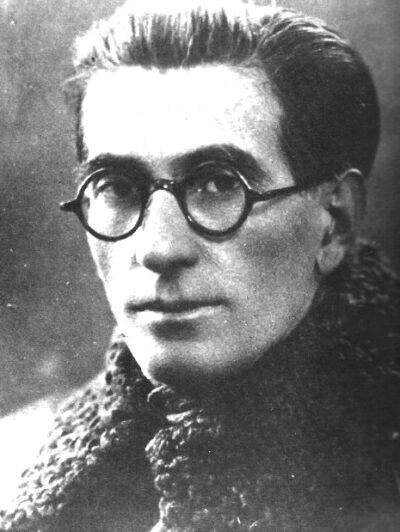
The Crusade of Romanianism (Romanian: Cruciada Românismului, also known as Vulturii Albi, "White Eagles", Steliști, "Stelists", or Cruciați, "Crusaders") was an eclectic revolutionary movement in Romania. Founded in late 1934 by Mihai Stelescu, it originated as a dissident faction of the Iron Guard, Romania's main fascist movement, and was virulently critical of Guard leader Corneliu Zelea Codreanu. Stelescu, who had served as one of the Guard's orators and paramilitary organizers, reinterpreted nationalist ideology through the lens of anticapitalism and "humane" antisemitism; also appropriating some ideas from communism and classical (Italian) fascism, his followers were sometimes described as Romania's Strasserists. The Crusade was briefly but centrally associated with Panait Istrati, world-renowned novelist and dissident communist, who, before his death in early 1935, added into the mix of "Romanianism" some elements of libertarian socialism. Stelists offered an alternative paramilitary symbolism to that of Codrenists, which included a cult of personality surrounding Stelescu and Istrati, as well as a uniform of deep-red (carmine) shirts—opposed to the green shirts used by the Guardists, which had also been introduced by Stelescu during his time there. In geopolitical terms, they were either fearful of, or openly hostile toward, Nazism.
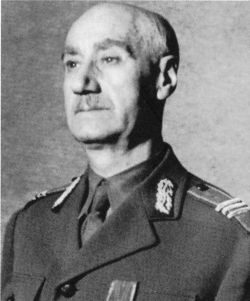
The Stelists, who sketched out plans for a nonviolent revolution, oscillated between maverick independence and alliances with more prestigious nationalist parties. In their early search for electoral gains, they gravitated mainly around the People's Party. In late 1935, the group experienced its own schism, after Constantin A. Caradja, its alleged financier, established a breakaway "National Front"; he later returned as a personal adviser to Stelescu. The Crusade itself was a minor party, whose decision of publicly settling scores with the Iron Guard proved fatal. In June 1936, Stelescu was murdered by an Iron Guard death squad, and his party only survived for less than a year. General Nicolae Rădescu took over as its leader, either formally or informally, but his management was resented by party members such as journalist Alexandru Talex and poet Vladimir Cavarnali, both of whom resigned in September 1936. Caradja was briefly the Crusade's chairman, but left in March 1937 to be replaced by Gheorghe Beleuță, who was the movement's last known leader.
Before 1938, Caradja still tried to reestablish the Crusade; such attempts were cut off by King Carol II, who outlawed all political parties and had them replaced with a National Renaissance Front, which, in early 1939, inducted former Crusaders such as Talex, Beleuță, Caradja, and Sergiu Lecca. During World War II, Rădescu and Lecca were right-wing opponents of the military dictatorship established by Ion Antonescu. Taking over as Prime Minister of Romania after the anti-Antonescu coup of August 1944, Rădescu fell out with the Communist Party, which toppled his government and pushed him into exile. The emergent communist regime persecuted known Crusaders, who were still a faction in the underground resistance movement, where they also pursued old conflicts with the Iron Guard. Talex was spared such treatment, and allowed to work for the regime; into the 1980s, he spurred controversy about the Crusade, denying that either Istrati or the Stelists as a whole were fascists.
From the Wikipedia article “Crusade of Romanianism” (en.wikipedia.org/wiki/Crusade_of_Romanianism), by its contributors, under CC BY-SA 4.0 (creativecommons.org/licenses/by-sa/4.0/). Copied 2026-11-17; not changed.
Confirmed Two sources agree. Cited One source, and it names where it got it. One source One source, without a reference of its own. Sources disagree The sources disagree. We show the best-supported value and keep theirs below.