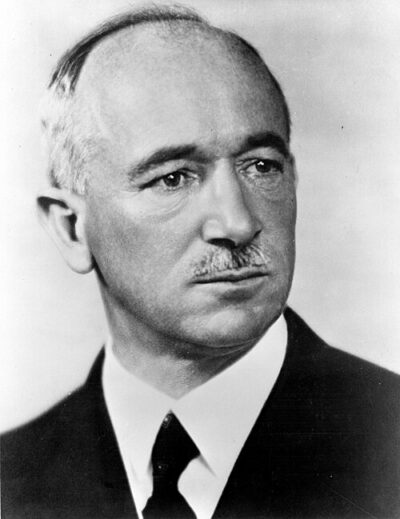
Czech National Social Party
The Czech National Social Party is a political party. It was founded in 1897. Its headquarters are in Mirošovice. It stands for Czech nationalism, euroscepticism and social democracy.
- Country
- Austria–Hungary
- Founded
- April 4, 1897
- Ideology
- Czech nationalism
All 10 facts, and where they come from
Facts
10 facts · 0 confirmed by two sources · 1 cited · 9 from one source
Where this comes from
Papalocal keeps its own record. It started from these sources; what each one said is kept here as it was copied, so a change on their side never changes this page by itself. Tap one to read its version.
What Wikidata says · copied November 17, 2026 · revision 2561362882
- Described as
- political party
- Other names
- Czech Socialist Party, Czechoslovak Socialist Party, Czechoslovak National Socialist Party, ČSNS
- What it is
- political party
- Founded
- April 4, 1897
- Headquarters
- Mirošovice · 1 reference
- Country
- Austria–Hungary; Czechoslovakia
- Ideology
- Czech nationalism; euroscepticism; social democracy; social conservatism
- Official website
- http://www.csns.cz
- Wikipedias with a page
- 15
Wikidata item Q341111 (wikidata.org/wiki/Q341111), public domain (CC0). Copied 2026-11-17.
What Wikipedia says · copied November 17, 2026 · revision 1376138514
The Czech National Social Party (Czech: Česká strana národně sociální, ČSNS) is a political party in the Czech Republic that played an important role in Czechoslovakia during the interwar period and then between 1945 and 1948. After 1989, its influence gradually became completely marginalized. Currently, the party is nationalist and cooperates with extremist parties. It was established in 1897 by break-away groups from both the national liberal Young Czech Party and the Czech Social Democratic Party, with a stress on achieving independence of the Czech lands from Austria-Hungary (as opposed to the Social Democrats' aim for an international workers' revolution). Its variant of socialism was moderate and reformist rather than a Marxist one. After the National Labour Party dissolved and merged with National Socialists in 1930, the party also became the refuge for Czech liberals. Its best-known member was Edvard Beneš, a co-founder of Czechoslovakia and the country's second President during the 1930s and 1940s.
Despite the similar name, the Czech "National Socialists" were not affiliated with Nazism or the German Nazi Party. While the early ČSNS made use of some antisemitic rhetoric, the party completely abandoned such positions after the First World War, when it was renamed to the Czechoslovak (National) Socialist Party. Instead, party representatives in the majority supported Zionism and highly supported German Jewish refugees in the 1930s. The party liquidated itself after the Munich Agreement of 1938. During the German occupation of Czechoslovakia, the Nazis persecuted (former) party members, who in turn offered resistance against the occupying forces or worked in exile.
After the Second World War, the party was revived and became the second strongest party, behind the Communists. After the latter took power in the 1948 coup d'état, the ČSS's role was reduced to a bloc party. Anti-communist members were persecuted again, forced into exile, or even executed like Milada Horáková. After the Velvet Revolution of 1989, the party failed to regain its importance. Since the 1990s, several splinter parties claim to continue the ČSNS's tradition.
From the Wikipedia article “Czech National Social Party” (en.wikipedia.org/wiki/Czech_National_Social_Party), by its contributors, under CC BY-SA 4.0 (creativecommons.org/licenses/by-sa/4.0/). Copied 2026-11-17; not changed.
Confirmed Two sources agree. Cited One source, and it names where it got it. One source One source, without a reference of its own. Sources disagree The sources disagree. We show the best-supported value and keep theirs below.